I don’t know about you, but 2025 has required some comfort reading. There have been days when I wanted to crawl between the pages like Peter Rabbit after his mama tucks him in with chamomile tea. That’s when a lot of us re-read favorites, but what if that doesn’t work?
Flying without the emotional safety net of Peter Rabbit’s chamomile? You don’t have to. There are ways to uncover bespoke, new comfort reads, even when you’re stressed. It starts with two questions.
Question One: What am I reaching for when I reach for a “comfort read”?
Question Two: What would be comforting right now?
Let’s start with the first question. “Comfort” means different things to different people at different times. For example, Dracula always worked for me because it evoked my cozy, perfect first reading at sixteen. Agatha Christie also worked because her mysteries engage my little gray cells in puzzles that has nothing to do with what’s causing my stress.
Both answers give me places to start. 1. books that evoke a comforting time or experience and 2. Books that distract my stressed-out brain.
Now, for the second question. What would be comforting right now?
This can be a little harder, because if you knew you wouldn’t be asking the question. So, here are a few ways in.
Experiment with books, genres or subjects that are straight out of your left field. Try sifting through a “Best Of…” list. Try a title that you’re a little ambivalent about. I don’t read a lot of political writing, but Abundance by Ezra Klein hijacked my brain with different problems and their possible solutions. Bam. Mental distraction.
Mine your TBR. Like, go deep. Find that book you bought for a $1 in 2017 and give it a try. You of 2017 may have left a great escape hatch for you of 2025.
Rampant nostalgia. Go back to books from when you were a kid. Get them Goosebumps. Binge the Baby-sitter’s Club. Revisit A Wrinkle in Time because, let’s face it,It is a dark and stormy night. Go back to your childhood shelves. It’s a PB&J for your feels.
Spoil yourself by reading backwards. Pick a book, flip to the back and read the ending. Then start it from the beginning. Don’t read to find out what happens. Read to see how it gets there. It’s a way to force your brain into different thought patterns. Try it! It’s weirdly engaging.
Go so far out of the box that you end up in a recycling center. Try webtoons. Try fanfic find what you’re looking for? Try writing it. You won’t be the only one with an Owl House shaped hole in your heart. Regardless of how you choose to engage, spend some time in a familiar fictional world. It might be the chamomile you need.
The main thing is to identify what you really need right now and let your readerly instinct guide you to where it’s hiding. Embrace the process and give yourself as much time and patience as it takes.
I am not an archivist. I’m a consulting records appraiser, which is low in a departmental hierarchy, but I like it. I move on when my contact it up, and I’m usually ready. I was especially ready after six months at the National Archives.
My contact at the Archives was a well-intentioned post-grad named Maggie. Maggie was earnest enough to labor under the false impression that co-workers should bond. After six months, I knew more about her cat than anyone should.
Maggie was nice though and I liked her well enough, so we arranged to have lunch on my last day. We were on our way out the door when a gaggle of archivists called her name. They were celebrating someone’s promotion and wanted to know if Maggie could join them. Maggie looked torn and it got awkward real fast, so I jumped in to tell her to go ahead.
I was people’d out and happy to grab a sandwich on my way home, but Maggie is a social person and can’t imagine anyone being happy eating lunch alone with a podcast. Before I could stop her, she asked if I could come too.
There was an even more awkward, agonizing pause before a mulleted ape of an archivist said, (really grudginly) “yeah, like I guess. If she wants to”. The implication was very much that she hoped that I wouldn’t want to. The subtext was so textual that I smiled brightly and said “I’d love to come.”
Petty? Absolutely. Plus, I most certainly would not have loved to come, so I screwed myself over too. I was just reactively pissed. It’s not like Martha Lynn Baxter (the archivist ape) and I were strangers. We had worked together, (albeit unpleasantly), for six months, and I was standing next to her well-marbled ass when she extended her grudging invitation, so I’m petty, but she’s rude. Screw you, Baxter.
Zelda, who was also in the room, met my eyes. Zelda is my mountain lion. We’ve always been together. When I was a girl, she was a cub. Now that I’m in my thirties, she’s a lithe, fully grown puma, (no fucking courage jokes, please). This sort of thing runs in my family. My mom has a cheetah named Richard. They’re in their golden years now, so they bustle more than run, but they’re just happy together. That’s how it is with me and Zelda. Content to be on our own….
Anyway, now our tolerable one-on-one lunch had turned into a clusterfuck of a group activity. At least they were going to a Greek place. Zelda loves Greek.
The whole gaggle trooped to the restaurant in two’s and three’s. I walked with Zelda behind the main group. It was actually kind of sweet the way they marched down the street like homeschooled kids on a fieldtrip. Not having lunch at their desks was clearly a big deal.
The restaurant was super small, so the waitress with a bobcat girded herself as the archivists dove for seats, jockeying for position like it was high-stakes musical chairs. I hate musical chairs. I waited for the feathers to settle and took a seat at the end of the table. Zelda curled up at my feet.
Spare staff hurried out with flat bread and fresh olives, which were absolutely delicious. Much to their credit, no one stepped on the tawny tail sticking out from under my chair. Meanwhile, the conversation rolled on, fueled by the first of four bottles of wine.
I closed my eyes. These people talked a lot, but now, thank Christ, to me, overall. Zelda was grumbling under the table, making do with the olives I slipped her while we waited for her lamb. Zelda has a punctual appetite and she gets cranky when her food is not equally punctual. With a cafe that small and group that big, it wasn’t surprising that the food was long in coming. I kept slipped her appetizers, hoping that if I gave her enough olives, the worst wouldn’t happen. This was optimistic, but you can only do your best. It’s not like I could make the kitchen move faster.
So, the conversation flowed around the boulder of my presence, and Zelda shifted restlessly and wuffled against my ankle. I looked down and stroked her ear, which she finds soothing. I find it soothing too. Pretty soon, I was daydreaming.
“So, what’s next?”
I looked up. My old buddy, Martha Lynn Baxter, had deigned to address me. “Sorry, what was that?”
“What’s next,” she said again, pitching her voice to be heard above the chatter. “What are you going to do?”
“About what?” I asked. I knew what she meant. I’d been passed up for a permanent position. I met her eyes and let my face slip into neutral.
“Oh, well,” she said, recalibrating her approach. “You know. Tenures don’t grow on trees.”
I smiled, trying to pass for a nice person. “Sure don’t. I’ll shake some bushes. Something will come up.”
“Whatever you say,” she said, smiling her simian smile. “Hey, I feel like I should tell you, I was the one who voted against you for the tenure position.”
I raised my brows. I wasn’t surprised by what she’d said, but I was shocked that she’d said. I looked around the table but everyone as still chatting as if she’d asked how I liked my ice tea. “Did you really,” I said, modulating my tone. Zelda gets agitated when I’m pissed. She must have sensed something though because she growled under the table. Her stomach followed. She was probably hangry. I checked the breadbasket. Empty. No sign of the waiter either. I bent and stroked her ear. Zelda shook my hand off and rounded the table before slipping back under the tablecloth.
Baxter nodded and shrugged. Baxter’s got balls, I acknowledged with reluctant respect.
“I”d love to know why,” I said, silkily.
“It was nothing personal,” Baxter said, bluffly assured. “I just couldn’t stand the thought of looking at your smug fucking face every day until I retire.”
I heard Zelda licked her chops beneath the table. I made meaningful eye contact and shook my head. She ignored me and bit Martha Lynn Baxter’s foot clean off. Baxter looked at me, expectantly. She had no idea that Zelda was tucking in.
“What do you have to say to that?”
“I’m sorry?” I asked. It’s not like me to drop a conversational thread, but having just finished her foot—clog and all—Zelda was gnawing her way through Martha Lynn’s savory calf.
“To the fact that lost a job because you’re so fucking unlikable,” Baxter clarified, oblivious to the animal chomping at her leg.
“Not much to say, is there,” I said.
“Guess not,” Baxter jerked in her chair as Zelda gnawed at her belt. She settled back down when Zelda made it through. Martha Lynn Baxter stared at me, retaining her focus while Zelda chomped at her torso. That kind of focus is serious. I began to wonder about her.
Moments later, the waitress put Zelda’s lamb on the floor. I murmured my thanks and nudged it with my foot. Zelda probably wouldn’t eat it now. Maybe for dessert…. Across the table, what was left of Martha Lynn Baxter (not much) attacked her risotto. Zelda was still nibbling. At this point, I was pissed, but holding it together like a fucking class act. I cut into my mousaka, conversationed out.
A few minutes later, Martha Lynn Baxter was gone, leaving behind half a plate. I reached over and took a bite. The risotto was excellent—subtle, creamy, perfect. I made a mental note to order it next time.
“Where did M.L. go?’ Oblivious to her presence, Baxter’s assistant nudged Zelda with his shoe. Zelda licked her chops. Her whiskers stood out from her muzzle, as if to salute meal. I looked pointedly at her lamb. Zelda smiled her big cat smile and bit the assistant. I shook my head and cut into my lavash. The whole department could fuck itself.
After gobbling up her second course in three happy bites, Zelda proceeded around the table, purring as she went. Incidentally, mountain lions are the only big cats that can purr—they’re exceptional that way. I love it when Zelda purrs. It’s one of my favorite things.
The din of conversation grew quieter as Zelda worked her way around the table. I could finally hear myself think, thank fuck. I poured myself a glass of wine and ordered dessert, still not full despite having helped myself to half of Baxter’s risotto. I’d just finished my baklava when Zelda ambled back. The table was empty. She sighed, fat and satisfied. I signaled for the check, but it was already covered on the Archive’s expense account, which was a pretty sweet surprise.
Zelda and I collected our things. I was absolutely stuffed. The waitress came by with Zelda’s lamb wrapped to go, but neither of us could look at it so we offered it to her bobcat. She introduced him as Mel. Then they thanked us and we left. I hadn’t eaten that much in ages. I must have been hungrier than I thought.
The letter to which you have yet to respond was the one that I wished for you to see – stymied expression of feeling that I could, under the circumstances, respect. The letter, which is the last that I shall send, was sensible and restrained, full of curated lines and unspoken words. It was written from the high ground, a lovely, unregrettable view.
Unsatisfying.
The letter that I am writing now, (which, for the sake of my pride, I will not send), is the one that I wished to write. It is not smooth. It is not measured. I am writing on my skin, down the length of my leg and up again, higher and higher, to the hollow places that you kissed. I will start at my hip and scrawl, “To my terrible love,” on that curved, hard bone. I will write of the cruel silences that my tongue could not fill; of the envy that I swallowed to keep your taste in my mouth. I understood your responsibilities, your conditions, your life. I embraced my confinement in a small, lush room.
I was your escape, you said, as you kissed up my thigh. It was creamy and white when you suckled on my skin – a clean, sweet expanse of improbable trust. I rose to meet the specifications required by your precise, exacting love, you alchemist. I became an extension of you.
You worked your chemistry with every murmur and bite. Your fingers drifting over my fine cotton blouse, your hot mouth lapping the salt from my neck, I love you, I love you, I love you, you said. More ink on my skin.
I became an arching back, a twisting neck, a grasping, sucking need hungry for your rich, invisible ink. I folded myself like a paper crane and tucked myself into a pocket room – a bottle and its djinn, a ballerina in her pretty little box….
I sent you the letter that I wished for you to see. Now, I cover my skin in my very own ink, thick and black, from my pen. When every kiss is covered, I will wash the ink away. Perhaps it will stain the claw-foot tub you loved.
You are in me and on me. Your name is in my bones. I will soak and scrub until it dissolves, and the water and ink go cold. I will write until I am calm. Because I am not calm. I am not calm. I am not calm, terrible love. You are an ill-fitting skin.
I posted a story on my other site yesterday that reminded me how much I love writing dialogue. A lot of my stories are fairly minimalistic, with people saying less than they strictly have to. It’s as much about what’s happening in the gaps as it is about what’s being said.
But yesterday’s story was the opposite – nearly all dialogue, driven by a comfortable, natural patter between two sisters. It was an off-the-cuff thing and it felt great. It also reinforced something that I’ve always known about myself as a writer – that my writing is informed by acting in all kinds of subtle ways.
I have no formal training as a writer. I taught myself how to deconstruct and write stories over the course of twenty years, two Master’s Degrees and lots and lots of books – good books, bad books and books I can’t even remember having read. What I do have is extensive acting training and experience working with characters on stage.
Which is why so much of my writing is character driven. There’s always a plot (because without plot, it’s a moment, not a story), but the plots are almost always fueled by a character’s internal drives and motivations, rather than external forces. This will likely change at some point because a person’s writing is almost never fixed. Like aspects of any other creative discipline, a writer’s style and voice tend to evolve over time (so long as the writer lets them).
What I don’t imagine changing is that I will always be primarily interested in the people I’m writing about, (as opposed to concepts etc). Because for me they are people – not little objects I’ve constructed – so it’s natural for me to want get into their heads and dig around. That’s where all the acting comes in handy. I analyzed and interpreted other people’s characters, from Shakespeare to Chekov, for years, so playing with my own characters is like working in a mental playground. And a natural extension of that is writing dialogue.
No one sounds the same. Even two people, raised in the same household, in the same place with all of the same frames of reference sound different because, in the end, no matter how similar they are, they are two different people. Ask any set of twins. But rather than consciously trying to make the two sisters in yesterday’s story sound different, I let their differences play themselves out.
One sister is sexually experienced and up for anything. The other isn’t so sure. So, how would a conversation about a new boyfriend’s fetish go down, especially if it happened over drinks with a hot bartender listening in?
So, you take your two people and you set them down in a context, and then you just let them talk. I know that sounds ridiculous and kind of woo-woo, but I honestly believe that good dialogue comes from being impulsive, open and trusting your gut.
That’s not necessarily the case with all things in narrative. Plot needs conscious attention because it needs to make sense (unless your Thomas Pynchon, whom I can’t stand). Other elements, however, need your conscious attention to get out of the way so your subconscious attention can go to town.
characters have an agenda because your brain has a story to tell, and sometimes you’re only 10% aware of what that story actually is. The characters are the subconscious dynamos that drive whatever that story is, so when you write dialogue without trying to consciously mold it, you’re allowing your brain to tell you the story in the voices of the characters who inhabit it.
Good dialogue isn’t “dialogue” at all. It’s a conversation. All you need is a (really) basic understanding of who’s talking, why and where, and you’re off. Sometimes nothing comes of it, but sometimes something does, and when it does, when your characters surprise you by sounding like people, not like extensions of yourself, you know you’ve written dialogue that works.
I know this sort of approach isn’t right for everyone because every writer is different. I write to find out what I’m trying to say so an instinctive approach to dialogue is natural for me. For writers who work in a more structured fashion, what I just described would probably drive them nuts. The bottom line is that, no matter how you work, dialogue should slip into the reader’s head. You want your reader to hear what’s being said, rather than think, “wow, that’s great dialogue!” Acting is just the influence that helps me get there.
Carys Davies’s second collection, The Redemption of Galen Pike, is one of those books that I raced through in one go, and then went back and read more slowly over the course of the week. Granted, this book is short (131 pages) so my all-in-one-go read isn’t that impressive. That said, the fact that it hooked me that hard is.
This collection gave me that weird, awesome, anxious feeling that you sometimes get when there are too many choices on a menu. It’s exciting, and the thing that makes it exciting is really cool and kind of rare – every single story in The Redemption of Galen Pike sets up an expectation and then thoroughly subverts it.
This is a tricky one to keep spoiler-free, so I’m going to focus on just one of the stories and hopefully not spoil too much. “Wicked Fairy” is one of the quieter stories in the collection. While they all defy expectation differently, “The Wicked Fairy” does it with a sort of ironic silliness that carries you through, even though you know how it’s going to end.
We open with the narrator, a guy named Lenny, noticing a girl at a wedding. She’s dark and thin and she’s carrying a pie. Over the course of the next two pages, Davies creates a sort of Atwoodian (I’m totally making that a word) dystopia, wherein this girl with the pie is a silent, unnoticed threat. Except that Lenny notices. He notices but doesn’t say anything, not even when the voice in his head screams “LOOK OUT DON!!! THERE’S A GIRL HERE WITH A PIE!!!!”
When she finally throws the pie, its impact on Don’s face reads like a gunshot, and you’re left with the image of social horror – a horrified crowd and a pie-covered groom and a dazed, empty-handed girl, standing there as if she’s shot him.
I love what Davies does with this. In films, this kind of scene usually unfolds in slow motion and ends in an assassination. So what’s Davies doing when she assigns all of those JFK cues to a jilted girl with a pie? She’s playing two things off each other.
The first is the seriousness of the jilted girl’s feelings. She wants to hurt Don and she’s going to do it…with a lovingly described cream pie. And that pie is the opposite of serious.
In playing those two things off each other, Davies sets up a situational dissonance ie: the is really serious!…but it’s a pie. The pie itself is the subversion of an expectation – one that involves real violence and tragedy. And yet, the pie is never treated as anything but a very real threat. So, in the world of the story, she might as well have pulled a knife.
So, what’s the point? Here’s how I read it. In subverting the seriosity of a familiar situation, Davies is implying that pie or no pie, the girl’s hurt is a powerful force. The fact that she doesn’t actually hurt him is beside the point. Within the context of the narrative, the social damage she’s caused is equally violent, which makes it a great commentary on the importance people place on big, elaborate weddings, rigid social structures and the power of public humiliation. All that from subverting one assumption – oh, no! She has a gun! with a different, equally threatening (in the story’s context) reality – oh no! She has a pie!
I’ll be honest, I laughed both times I read “The Wicked Fairy” because, for all that geeky analysis, it really is funny. As one of the lightest pieces in the collection, it did a great job of quietly satirizing all sorts of things while giving the reader a bit of a break. Some of the other stories are beautiful, powerful heartbreakers, all of which are so worth reading. In fact, however, you end up reading it, this collection is very much worth reading.
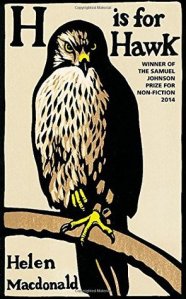
I almost called this post “In Praise of Narrative Flow” because that’s what initially pulled me into H is for Hawk– Helen Macdonald’s crazy-natural use of narrative flow.
But before I get into that, I should say up front that I kind of loved everything about this book. In a very personal way, it was exactly the right read at exactly the right time, so I can honestly say without any reservation that it’ll probably be one of my favorite books of 2016.
Now, to get back to narrative flow. What I mean by narrative flow is how the writer’s use of pacing, rhythm and execution, and how they interact with the reader. Here’s an example from Hemingway’s “Hills Like White Elephants”:
The woman brought two glasses of beer and two felt pads. She put the felt pads and the beer glasses on the table and looked at the man and the girl. The girl was looking off at the line of hills. They were white in the sun and the country was brown and dry.
Side Note: If you haven’t read Hemingway, goddamn, check out his short stories. I’m not a huge fan of his novels, but his short stories are a-maze-ing. He really was a master of the form.
So, narrative flow. This quote captures the tone of the story – staccato, disjointed and ambiguous. Things are said in this story through what is not said – the way the woman looks at the girl, the way the girl is looking off, the way the hills seem separate from the land. The flow is a little choppy, a little disorienting and that’s perfect because it mirrors the heat of the day and the girl’s state of mind. In this case, the narrative flow feeds into the story’s overall tone. It’s brilliant.
Helen Macdonald does something equally brilliant in H is for Hawk. Narrative flow is important regardless of what kind of narrative it is – fiction or nonfiction, short or long. Whereas Hemingway used flow to give his short story a visceral impact, Macdonald uses it to a different effect – she weaves a tapestry with it so the reader becomes wrapped in her grieving state of mind. And yet, the hawk remains firm and clear in the middle of her grief. The hawk is always the focal point.
The hawk had filled the house with wildness as a bowl of lilies fills a house with scent.
Macdonald’s imagery is threaded through her prose. It’s sensory and very specific. It also accurately reflects how thoroughly the hawk will come to define her life for a time. There are a million gorgeous quotes I could pull from this book, but they all have this quality – the prose is packed with more than words. Expand that out to the entire book and you get narrative flow.
There are two main threads in H is for Hawk and I’ll admit that, at first, I didn’t quite buy into one of them. In addition to her own autobiography of grief, Macdonald weaves in a mini-biography of T.H. White, the author of The Once and Future King, as well as, (more importantly for this book), The Goshawk, an account of his failed attempt to train a hawk. In the beginning, the White chaptersfelt a bit strange and intrusive. But slowly, they began to make sense. Slowly, they begin to reflect Macdonald’s fears and isolation as she trains her own goshawk, Mabel. The White chapters become critical to understanding the depth of Macdonald’s grief and how falconry becomes a metaphor for the process of healing.
They also act as a counterpoint to her relationship to her own hawk. White botched his hawk’s training horribly. Macdonald, by comparison, is hyper-aware of the bird, to the point that she begins to over-identify. As she does, the flow becomes leaner, tighter, and narrower, almost reflecting the pinpointed focus of the bird she’s training. Then, as the training progresses and she processes her grief, the focus slowly expands. The flow loosens. Macdonald’s narrative develops a rhythm that underscores her emotional experience. That alone helped me, as the reader, to connect to the book on a basic, instinctive level – it bypassed my brain and hit my emotions, which for me is where it counts.
And that’s the power of narrative flow – it’s a way to by-pass the reader’s logic and burrow under their skin. I’m sure there are other names for it, but that’s essentially how I think of the structural rhythm of a book. Some writers engineer it ahead of time, but that almost never works for me. When I write, the flow kind of just happens in the first draft. Then I hone it through revision and edits. Macdonald’s narrative rhythm feels so natural, so deeply tied to the text, that I wonder how much of it was engineered and how much of it just happened. If I’m ever lucky enough to talk to her someday, I would love to ask.
I’ve been thinking about how I want to approach writing about books. I used to write fairly standard reviews and that was fine but, honestly, there are so many good review blogs at this point that adding my opinion doesn’t feel particularly necessary. I can talk about what I liked or didn’t like about a book, but it doesn’t bring anything new to the table. And who knows, maybe there is nothing new to bring, but I want to try.
The fact of the matter is that my opinions aren’t unique – they’re personal and informed by my experiences – but so are everyone else’s. Generally speaking, my opinion doesn’t carry much weight for a person who isn’t me. That’s why I’m going to avoid the temptation of giving a general opinion and focus on something specific instead, something informed by the way I read.
The way I read has changed a great deal over the years. I used to read purely for entertainment. Then catharsis. Then curiosity. Then entertainment again. At this point, I read all across the board for a lot of reasons and, while I’m attracted to a different kind of book than I used to be (more on that in a post of its own) the fact is that I read widely from all sorts of genres and styles for all kinds of reasons. The only through-line in my reading is that I have an agenda. In addition to reading because I love to read, I read to become a better writer.
Even when a story has completely gobbled me up, part of my brain is whirring away, deconstructing and noticing and trying to figure things out. I love the craft of writing. I love technical elegance and subtle, inventive structures. I love the little mechanisms that make, or fail to make, a piece work. Sort of like a person who disassembles clocks, I love to dissect stories to see how they tick.
I’ve always done this to some degree, but the habit got formalized in college and grad school when I started applying theory to what I read. Later, when I started teaching myself how to write fiction, I applied the same principle. I found writing books that emphasized reading for different aspects of craft, from characterization and structure to pacing and voice. Slowly, I habituated myself to noticing these thing regardless of what I’m reading. That was more than twelve years ago, and that anatomical approach is just how I read now.
That’s why I talked about the structure Sarah Waters used in Night Watchand noticed the different way Muriel Spark manipulates the reader in The Driver’s Seat. It’s why I love Helen Macdonald’s use of a loose narrative style in H is for Hawk (there’s a post coming up on that). It’s not about me being all Miss Fancy Pants – it’s just the way I enjoy books.
So, rather than blog my general opinion, as scintillating as it may be, I’m going to write about the book from a writer’s perspective, hopefully in a way that isn’t totally boring for non-writers too. If nothing else, it’ll give me a chance to talk about two of the things I love most – stories and how they’re made.
There aren’t many writers I trust completely, but Sarah Waters is one of them. Regardless of where she takes me, I know she’ll get me there and back safely, whether it’s a Victorian insane asylum or an ambiguously creepy manor house post-WWI. In fact, her writing is pretty much guaranteed to do three things for me:
1. Emotionally affect me, often in very uncomfortable ways.
2. Challenge my expectations.
3. Teach me how to be a better writer.
Her fourth novel, The Night Watch, which has been sitting on my shelf since 2006, (I was saving it for a rainy day), does all three things so well that it may replace Affinity as my favorite of her books.
What surprised me most about The Night Watch was the structure. I know that doesn’t sound super exciting, but everything about it, from plot to characters, feels heightened because of it.
Rather than adhering to a standard, chronological structure, the narrative unfolds in reverse, starting in 1947 and moving backward through to 1941. The effect is amazing – events that would have struck me as suspenseful became massively poignant because of structural hindsight. The reader knows what’s coming, but the characters don’t, and yet, Waters balances that readerly omniscience with a lot of unknowns. She opens the novel with a clear picture of the characters’ fates, but you don’t understand the significance of those fates until the very end (or rather, beginning) in 1941. The tension that created anchored me to the book so hard I couldn’t put it down. (That’s where #3 – Teach me how to be a better writer – came in).
The Night Watch is comprised of the seemingly separate stories of three women and one man, but they are, in reality, tightly interwoven, a fact that Waters reveals slowly as their histories unfold. I don’t want to get too deep into how their stories interweave because spoilers would really ruin it, so instead I’ll talk about the characters who touched me most…which is to say, all of them – even the ones who were awfully flawed.
It’s the trick that Sarah Waters always manages to pull – that of putting difficult things in front of you while compelling you to read on. And I was compelled, just as I always am. The characters in The Night Watch ache with love, jealousy, desperation, fear, shame and the longing for things they can’t have. But while there is a lovely sense of hope for some of them, the future, for others, is left opaque, most affectingly, for me, the ambulance driver, Kay.
Kay may win or Kay may lose, but to see her win, Waters would have to allow us to see past the chronology of the book. The fact that we can’t might drive some people nuts, but it made me love the book even more. It underscores the fact that Waters is only giving us a sliver of their lives, which made their difficulties bear even more weight while casting the good in an even more poignant light.
I’m a glutton for that kind of thing, which is why I’m a fan of Sarah Waters. Though it took me ten years to read The Night Watch, I’m glad I waited for that rainy day. As a reader, I brought much more to the table at 38 than I would’ve at 28. That said, I’m going to try not to make it another ten years before I read The Paying Guests.
I set this blog aside more than 2 years ago when I decided to focus on other areas of writing. As much as I missed it, I’m glad I did because the time I spent honing in on erotica and sex writing resulted in a ton of growth, both as a person and as a writer. While my fiction is starting to skirt the edges of different genres, sex and sexuality have become the central thrust (ha!) of my creative and professional life. In fact, the past two years have helped me realize that sex is the lens through which I naturally see the world. But more about that on my other site.
Cleverboots is, and always has been, a kind of miscellany, as opposed to the dedicated focus of People. Sex. Culture. That dedicated focus is a really good thing, but it leaves some of my personal passions dangling, most especially reading. I slowly stopped reading for pleasure and only read for work (before you say “poor, baby”, figure it’s like a barista not wanting coffee at home).
Thanks to all of my work reading, gender identity, feminism, the body politic and other social concerns now flash a bright on my cultural radar. Unfortunately, a lot of my other areas of interests, like history, psychology, and non-erotic fiction, got uncomfortably dusty.
Now that things on the People. Sex. Culture. side of writing are established and slowly growing, I’m anxious to get back to basics. That’s largely reading for pleasure, but it also covers a lot of other things, like film, pop culture and current events. So, I’m rebooting Cleverboots as a personal / book blog.
So, that’s what I’m up to here. People. Sex. Culture. is still my primary site, just as the scope of my writing is naturally sex-related – nothing there is changing. More than anything, Cleverboots will function as an occasional, personal / reader’s blog. And I can tell you right now that it’s going to be a pretty casual place.
I’m going to be pretty open with topics and write fairly off the cuff (except for reviews, which will be earnest and considered because I can’t helpt it). I’ll also end up posting the odd, occasional story that has nowhere to go. If my other site is a pair of pretty heels and a classy, black suit, Cleverboots is jeans and my favorite sweatshirt. Both are 100% me. This is just where I’m likely to rant, ramble and brood like the Super Big Book Nerd I am.
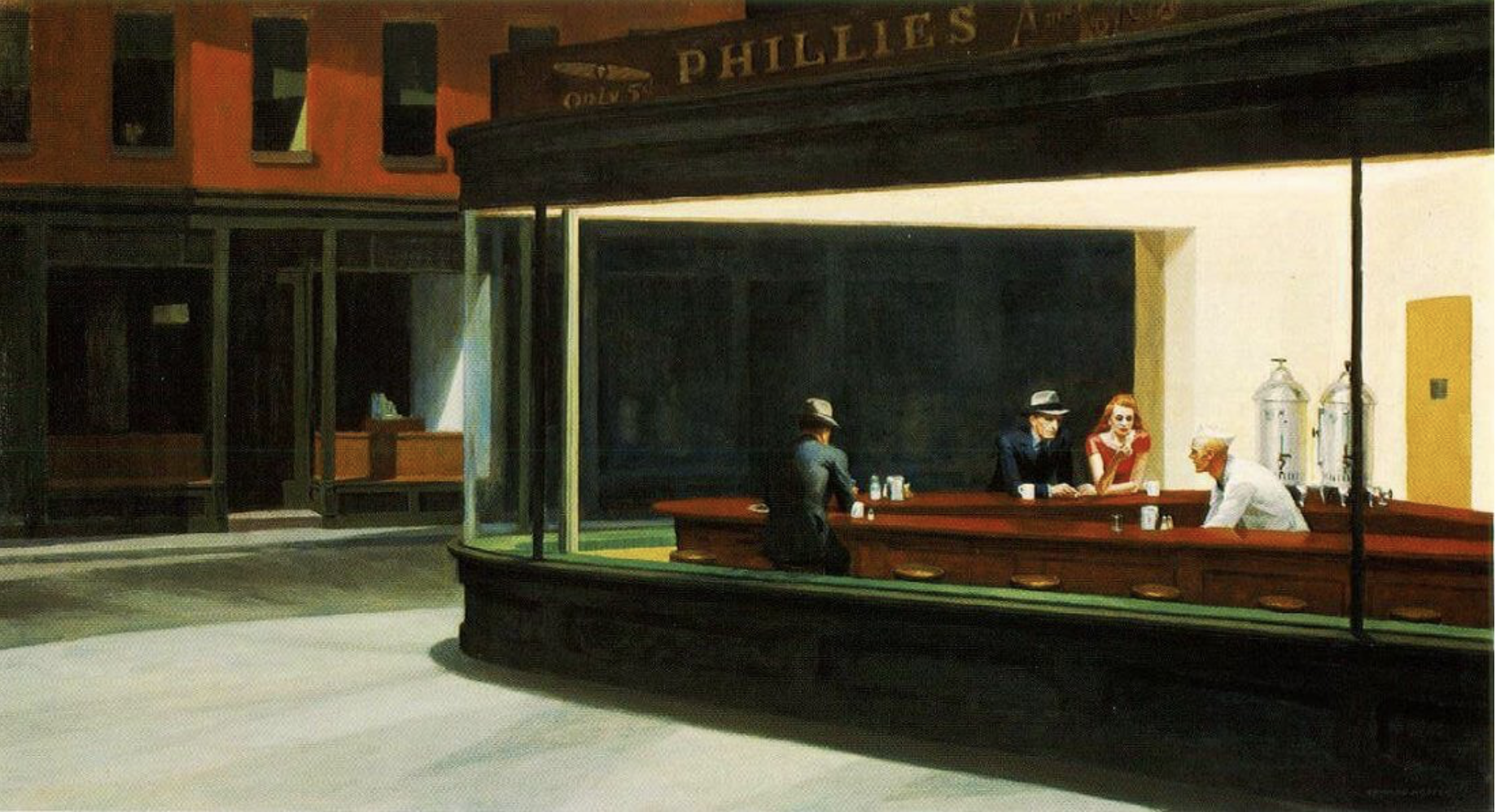
Rose looked at her reflection in the polished mahogany counter. She didn’t look good. The day had caught up to her, stripped her color and sharpened her face. She dabbed at her lipstick with a napkin. Too red. It looked funny. Rose put the napkin down. She used to like that red. So had Eddie. Eddie had liked that color.
Red, red lips for my red, red, Rose….
Rose’s hand plucked at her earring, her coffee, her locket, before inching over to rest on Rob’s sleeve. She liked the feel of his woolen jacket under her quick, nervous fingers. Nice and warm. Solid. Rob. She sighed. It had been a long day. It was time to go. She wanted to say that. It’s been a long day. It’s time to go. But his downcast eyes trapped the words in her mouth. He wasn’t ready yet. She could wait.
Widowed at thirty. Thirty was too young for how she felt. For how she looked too. Her reflection looked worn out and old—not pretty anymore. Her eyes slid to the floor. She didn’t really care. Everyone was dead. Eddie was dead. The baby was dead. Her father—hers and Rob’s—was dead, but that was nothing to cry about. Their father had been a lucky son-of-a-bitch.
Rose glanced at her brother and stopped the thought, just in case he read her mind. Sometimes he could. He couldn’t, not really. But sometimes he knew. She couldn’t read his either, but sometimes…. She clutched her thick, glazed coffee mug with both hands, prepared to wait.
It’s been a long day. It’s time to go home.
She looked at Robbie’s profile, his hawkish face, and quietly looked away.
The dead weren’t lucky, but she felt like they were. She couldn’t say that to anyone, especially her baby brother. He didn’t need to hear it. He’d done enough already – more than she wanted him to. He’d visited her in the hospital and tied pink ribbons around her wrists. He came by or called every day. He worried so much. She made him worry.
You worry, Robbie. You worry too much.
She was tired. It was time to go home.
Rose sighed, a small, shallow breath. Everything was done. This time he’d have nothing to find. Poor Robbie. She was glad they’d spent the whole day. Rose fingered her locket. The gold was warm. It felt soft when she pressed it. There was a picture of Eddie and the baby inside.
She glanced at her brother through her sweep of red hair. Red, red hair. Red, red Rose. Rob’s comfortable silence was the only thing she would miss. His face looked dark, like a shuttered house. No lights. Locked doors. She had to wait for him to be ready. They would sit together in this in-between place, coffee cold in their cups. When he was ready, he would take her home, and then she would go to Eddie and the baby. She loved her brother. She could wait.
Robert
Robert knew that she was going to try it again. He could read it like newsprint in the lines around her mouth. He missed her smile, her real smile, her cracking, half-cocked grin. He hadn’t seen it in months. Instead he got what she gave him now…pale lips under too much lipstick. Her hand was cold on his arm.
She’d gotten dressed up for their day out, special occasion dressed up—Hayworth hair, her favorite pink dress, she’d even worn perfume. But her bones were sharp beneath her collar. Her wrists were thin and hard. He wished she’d worn a sweater. It was turning cold, too cold for a thin, silk dress.
Why don’t you bring a sweater, Rosy?
I’ll be okay.
The second she’d said that, he’d known. That dress, her hair, her too bright face…he’d known exactly what was coming, and he didn’t want to know.
He lit a cigarette and let it burn. Tiny column of ash. Then he lit another. Beside him Rose shifted, patient, silent. She wanted to go home.
See you tomorrow, Rose
I love you, Rob.
Robert sipped his coffee. He should say something. He should stop her. But, Jesus, she looked spent up…. Rob glanced at his sister, though the sweep of her strawberry hair, but he couldn’t see her face. He wasn’t sure he wanted to. Robert signaled for the check. It was time to take her home.
“More coffee?”
Robert paused.
The waiter poured.
One more cup.
Charlie
Wish that kid would quit staring and do his job. Goddamn coffee’s cold.
Across the diner, the old man hunched over the counter like a bulldog over a bone. He eyed the yellow-haired waiter, who was eyeing the redheaded girl. Like staring was going help her. A gal like that never left her man, not if he beat her into the ground. After thirty years he knew.
Charlie rubbed his bum knee. He wished he could sleep. He hadn’t slept since he’d retired. Not a full eight hours. Not in a month. Best wishes, Charlie! Retirement—you lucky son-of-a-bitch!
Yeah. Real lucky.
Charlie leaned back on the hard stool, regretting the watch the boys at the precinct had given him. He hated fishing, hated crosswords. His buddies were still on the force. Doris was remarried and Katie was busy, making a life of her own. She’d even gotten a job—secretary at some firm. Smart girl. Katie had always been smart. Maybe not pretty, but smart. He could hear Doris telling her to dress up nice for work. Christ, he wished Doris would shut-up.
Charlie shot the waiter a look and clacked his cup softly. The kid strolled over, refilled it from the urn and handed it back to him. Up close, Charlie realized, the kid wasn’t much of a kid. Pushing thirty, he’d bet. Charlie grunted. At twenty-six, he’d already been on the force for five years. Guy should get a real job.
Charlie looked out the diner’s plate-glass window at the dark, disinterested street. What did you do when you got cut loose? Kid’s got his whole life and he wastes it, like it’s something to toss away. The old man shifted. He was starting to hate that kid….
He should probably head home. It was a long walk back to his place. Maybe that would wear him out. He reached for his wallet, straining the seams of his suit. Cheap suit. Work suit. He took out his Luckies instead. One cigarette. One more cup. Then he’d toss a buck on the counter and take the long walk home. Back to his apartment. He hated that apartment. He hated the way it looked—half empty, full of nothing worth saying, like old newsprint. He hadn’t seen it that way before. He hadn’t had time—he’d barely ever been home. Now he saw every night. Charlie sucked the hot coffee between his teeth.
Christ, he wished he could sleep.
Joe
That lady looks sick. Joe glanced up from a tray of half-empty saltshakers. What’s she doing out so late with that guy, anyway? She looks like she should be in a hospital or something….
Joe shook his head and refilled the shakers without taking his eyes off the lady in the pink dress. He was good at working and watching. He never spilled.
Look at how she’s holding his arm, he thought. Like she’s gonna drown and he’s the only thing keeping her afloat.
That was good, Joe thought. He had to write that down. He stopped pouring and wiped his hands before getting out the little notebook he kept in his apron pocket.
He loved working the late shift. Nothing like it for writer’s block. Nothing like it for inspiration. The lady and her fella were great. He had to use them somewhere…maybe he’d put her in a sanitarium and make the guy her lover. And the guy… a private eye with a shady past? Maybe he broke her out and now they’re on the run. However Joe wrote it, it was gonna be tragic. That lady was tragic all over.
Joe glanced across the counter at the old guy sitting on his own. Not much there. Just a sad sack. He wasn’t as compelling but Joe could work with it. Maybe a tired crime boss or a has-been reporter. Joe studied the man nursing his hundredth cup of coffee. Thickset. Stubborn build. Angry mug. Joe nodded and grinned. He’d make the old guy the redhead’s father. Iron fist with heart of gold.
The old guy shot Joe a belligerent look.
Skip the heart of gold.
Joe shrugged. Even after he’d sold the novel, he’d still work the graveyard shift. He loved the diner at night. Nothing like it for writer’s block. Nothing like it for inspiration.
Joe pulled out a pen. Down the counter, the man paid the tab and helped the lady up. She stumbled. He caught her. Joe bent over his notes. He barely looked up as they left.

 I posted
 I’ve been thinking about how I want to approach writing about books. I used to write fairly standard reviews and that was fine but, honestly, there are so many good review blogs at this point that adding my opinion doesn’t feel particularly necessary. I can talk about what I liked or didn’t like about a book, but it doesn’t bring anything new to the table. And who knows, maybe there is nothing new to bring, but I want to try.

 Madeleine James