The Joy of Catharsis

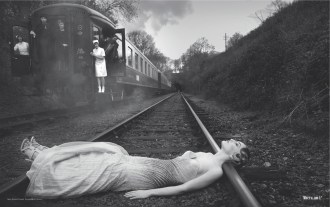
Black and white photograph of a woman in a white dress lying on train tracks, for The Joy of Catharsis by Malin James

Photograph by Marco Sanges (2011)

I’m a feelings junkie. This isn’t always a healthy thing, but it is the way I’m wired and I’ve learned to work with it. I tend to feel emotion (both mine and other people’s) really intensely and, every now and then, I like putting myself in the position of feeling to nearly painful degrees.

If a book breaks my heart, or makes me snort on the train, or scares me so badly that I’m afraid of my own bed, I will love that book, and the person who wrote it, hard. Any author who can effect my cortisol levels is an author I respect. It’s all about catharsis, and the relief that comes with it.

Living life as a functioning adult requires that I maintain an even emotional keel. This is a very good thing, but it can also be a challenge, especially when you’re a highly-feely-feeler person. My big feely-feelers tend to make a mess out of things if I don’t maintain an objective perspective, so a great deal of my energy goes into being mindful of where I am in a situation and how I feel about it.

Over the years, I’ve found ways of maintaining my emotional equilibrium that let me feel my feely-feelers without A. making a huge mess of things or B. suppressing them. But this generally means that I experience emotions that don’t get verbally expressed as intensely as I feel them. Enter catharsis – the process of releasing (and thereby getting relief from) strong emotions.

My inner sadist would love for my heart to get broken so I could do something grand and tragic like throw myself at a train like Anna Karenina. While I would never actually do that (because I really want to live), I still crave the emotional catharsis that comes from those heightened emotions. So, rather than becoming one with the A-train, I read Anna Karenina and boom. I’m sobbing in bed as beautiful Anna does what my logical, even-keeled self would never do. And goddamn if it doesn’t feel good.

The truth is that I don’t care how “good” a book is so long as it makes me feel genuine emotion. Even if it doesn’t reach Russian novel levels of catharsis, I like feeling and that only happens when an author gets under my skin by over-riding my brain. I can enjoy a book without this happening, just like I can enjoy sex that doesn’t turn my world technicolor. But every now and then, I stumble over a book that digs right in and hurts. And I love it. So, if I want this, why don’t I go straight for books like The Road – books that I know will hurt to read?

Let me compare it to dating. It’s going on OkC vs. randomly meeting someone and hitting it off. There’s nothing wrong with OkC but, for me, the sparks really fly when chemistry smacks you right out of the blue. So, bringing it back to books, I know that reading Sophie’s Choice will mess me up. I know exactly how and why. Reading it would be pointless self-torture, and that’s not what catharsis is. It’s the release of emotions you have inside you, not poking a stick at things that already hurts.

This makes catharsis a really personal, hard-to-predict thing. It has as much to do with what I’m bringing to the table as it does with the book. In other words, it’s all about my context and how the book plays with it. I can pick up a book like The Natural Order of Things, (which I will eventually read along with A Little Life. Sophie’s Choice not so much), expecting a catharsis that doesn’t come, just like you can go on OkC, find a 99% match and find, as soon as you meet them, that the spark isn’t there. Alternatively, I could be reading an airport thriller and get punched in the face with it. You can’t make catharsis happen any more than you can force sexual chemistry. It either happens or it doesn’t. You’re just along for the ride.

So, cathartic books that I never saw coming….

Affinity by Sarah Waters. Holy god, I felt physically sick. It was glorious. Iain M. Banks’ Use of Weapons was the same thing. Hemingway’s “Hills Like White Elephants”, Ellroy’s L.A. Confidential, Ian McEwan’s Atonement, The Rogue Pirate’s Bride (don’t ask), “The Big Blonde” by Dorothy Parker…they all came out swinging from left field. Each one of them wrecked me and, after the big ol’ feelers passed, I was left with a level of emotional clarity I hadn’t had before.

Ultimately, that’s what I’m after. I want my foundations rocked – it’s a way of living vicariously through words. It’s why I write character driven stories. Catharsis is an earthquake that causes a shift and I want to feel (and be responsible for) that movement. I want the pain and intensity of it, along with the happiness and joy.

Catharsis in books give me a place to put all of my emotions that have nowhere healthy to go. It gives me perspective on experiences I’ve had and a window into worlds that I will never see, and those are beautiful things. I want to be affected. I want to feel. I want to live more life than I have to live. The joy of literary catharsis is that it allows me to experience emotional intensity (and feel a sliver of its aftermath) without taking the destruction on as my own.
Everything Happens…

Screen Shot 2016-07-15 at 12.23.44 PM

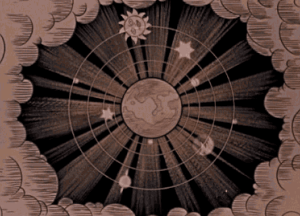
Earth at the Center of It All

Today is the funeral of Alton Sterling, the man who was (senselessly and illegally) killed by Baton Rouge police last week. Yesterday, a man drove a semi-truck full of weapons into an unarmed crowd in Nice, killing at least 80 and probably more. Last month, Omar Mateen shot and killed 49 people at an Orlando nightclub.

These are hardly  isolated incidents. We know that, as individual tragedies, they represent thousands of under-reported human tragedies. Or, if you want to get really nasty, they highlight the violence that we have leveled at each other for millennia.

Maybe this knowledge – that tragedies are common and always have been – underpins the  impulse to say, (with every  intention of giving or taking comfort), that “everything happens for a reason.” As a  well-meaning response to tragedy, either personal or global, it acts in a dual role of  bromide and organizing principle – take comfort. Nothing so  awful as miscarriage, police brutality, or suicide could be senselessly wrought.  Your suffering cannot be senseless. There is a bright side to look on.

The idea equivalent of a hug after a nightmare. I almost wish I believed it.

For me – a person who has never believed in the Judeo-Christian God, or in universal answers of any kind, it  feels like a lie, and I can’t bring myself to trust it.

Before I go on, I want to make it clear that I’m talking about my own world view here. A lot of humanity believes that everything does happen for a reason, just as a lot of humanity believes in a God. We all engage life in individually determined ways (…which my ultimate point, but I’ll get to that). My atheist / Buddhist worldview works for me, but if you believe that everything happens for a reason that’s cool too. I’m not interested in challenging (or judging) your belief. I’m just expressing why I don’t share it.

Over the course of my life, some bad things have happened. When I was younger, I struggled with the why of it. I clung to the idea that everything must happen for a reason because I couldn’t bear the idea that my hurt was for nothing. Then I read an interview Keanu Reeves did after his girlfriend died 18 months after giving birth to their stillborn daughter. You could feel the interviewer trying to figure out how to address the almost embarrassing amount of personal tragedy Reeves had just sustained.

As part of the interview she asked him if he believed that everything happens for a reason. And Reeves, very calmly, said, “No. I believe everything happens.”

Suddenly, my attachment to the idea of a cosmic rationale dropped. Because yes. Everything happens whether it’s justified or not. You cannot assume there is justification (or even a  meaning) for unbearable things. When we say “everything happens for a reason” is a plea –  “please tell me it’s not for nothing.”

Keanu Reeves’ girlfriend died because she lost control of her car. She did not die so he could become a better Buddhist (or actor, or activist). His response was self-determined. If he became a better [fill in the blank], it’s because he chose to, not because her death was meant to be.

Likewise, bad things happened to me because someone decided to do them. Not because it would make me the person that I am. My self-determined response helped make me who I am, but it does not give cosmic meaning to, or justify, the events that cauterized me.

God does not open a window when he closes a door. There are no windows and there are no doors. There is no fucking house. There is only what we do – to and for each other, as well as in response to horrible things that happen. Because things do happen because something prompts them – ‘reason’ as part of cause and effect, rather ‘reason’ as higher cause. Let’s take Nice.

Nice happened because a man decided to attack an unarmed crowd. It was a random and violent example of one man imposing his will on the lives of innocent people. Those people were acted upon in a terrible, tragic way. They had no control. They were victims of a cause and effect without ever knowing. Now, in the aftermath, the survivors and family members will respond. Their responses are self-determined reactions to the individual effects of a massive tragedy. Some will find ways to a positive personal outcome. Others won’t.

I know that my emphasis on self-determination rather than on faith in a higher power may read as flimsy to those who believe in determinism. From that point of view, it would be easy to read this and say, “Ah, but what if your “self-determined” response is just part of the plan? What if the horrible things that happened did so to get you to this pre-determined point?”

Honestly, I can’t answer that because from the point of view of having and protecting a belief, that makes total sense. I just don’t have that point of view. The way I’ve experienced it, I respond based on a deeply personal, internal calculus that is largely instinctual. I have no faith to put my trust in, so I am forced to  trust myself. This is, I must emphasize, not easy because what the hell do I know?

For me, we are all individual actors responding to cause and effect phenomena  that defy justification. If you find comfort in the idea that everything is pre-determined, then take that comfort. Take what comfort you can get.

On Reading Sex

Sepia toned photograph of a nude woman wearing a feathered head dress. For On Reading Sex by Malin James

Photograph by Marc Lagrange. (On a side note, I love this image. It reminds me of The Story of O.)

When I was in my teens, I literally learned about sex by gobbling massive, towering stacks of Harlequin Historicals, the more bodice-rippy the better. In my twenties, I went through a period where i read everything from Henry Miller (filthy sonofabitch) and Anne Rice (kinky, pretty things) to Literotica and CleanSheets.com.

Somewhere between reading erotica and writing it, something changed for me though. I started reading erotica more critically in my twenties because I was getting a Master’s Degree and I was reading everything more critically. I’m kind of a recreational thinker so that’s not the worst thing, except that the habit of reading critically cut the connection between erotica and my sex drive.

Almost as if to compensate, books that were not written as erotica were turning me on in super hot, unexpected ways. Angela Carter, Ian McEwan’s Atonement, Andahazi’s The Merciful Women, The Gargoyle by Andrew Davidson…I’d be reading along and suddenly get slammed with a crazy, elemental need to get off. It wasn’t that the sex was better written, it was just contextually more specific.

Stick with me – I’m going somewhere with this and it has to do with that contextual specificity.

As I got older and more experienced, I understood my sexuality more. By then, I’d had all kinds of sex in all kinds of contexts and, as a result, what turned me on was changing. In other words, what grabbed my brainstem at 15 was doing it at 25. My buttons had gotten way more specific in those intervening 10 years, and that affected the way I read sex.

The point is that everyone’s sexuality is different, so everyone reads sex differently depending on what kind of experiences or curiosities you’re bringing to the table. That’s why there is no one “right” way to write sex, and no “right” way to read it. Sure, there’s bad sex writing, but there also bad sex in real life. That’s just part of the deal, whether you’re reading it or doing it.

The other issue is one of place in life. It’s why the sex you had in your boyfriend’s dorm was the hottest thing possible at 18, but why it might not get you off at 38. We read sex differently at different points in our lives because we experience sex differently at different points in our lives, and our needs and tastes tend to reflect that. The same principle goes for audio and visual porn. It even applies to the movies you are hot, (even if they’re awful…hi, Bram Stoker’s Dracula. I heart you).

It’s worth remembering all of this when you judge the value of a genre, (and genre, really). Whether or not you think they have literary value, erotica and romance serve a sexual and emotional purpose that exists beyond the standards of the Man Booker prize. It’s not an issue of the genre’s value, it’s one of the value it has to individual readers at any given time, and that value matters as much as literary merit. For some readers, it matters more.

Small Fiction: Memory Palace

Photograph of a wealthy abandoned house with broken chair in the foreground, for Memory Palace by Malin James

From Matthias Haker’s Decay series

She looked up at the dripping world. Water dripping from dripping skies only to disappear into the gray-green grass. The water did not saturate. It disappeared into the grass, which was full to the brim with emptiness.

His shoes, worn out New Balances that collapsed, unable to hold their shape without a foot, were empty, unable to bear up. His Apple mug from the eighties was empty, as was his particle physics cup. She wished she hadn’t washed them yet. He’d them bought for nostalgic purposes. Not nostalgia. Nostalgic purposes. Because that’s the way he’d talked.

He’d liked things that had purpose, things that held memories were all right, but better yet if they also information or reminders of coffee or M&M’s. Even things that held memories should do something more than gather dust like his mother’s porcelain squirrels.

Their house full is full of things with purpose. (His mother’s squirrels went to a charity shop, after she died). Now he is gone and his shoes are empty, but she has his mugs…. She has his things with purpose, that have, just recently, acquired a new one. They must organize her memories of him. Half-finished books bought on that trip to Sonoma, the cord to an old cell that he kept in a shoebox, just in case, (“just in case” could be a worthy purpose). She would keep his favorite gin. She would keep his dark-roast in the jam jar. She would not consume them, for to do so would be to steal them from their purpose.

Book Lust London

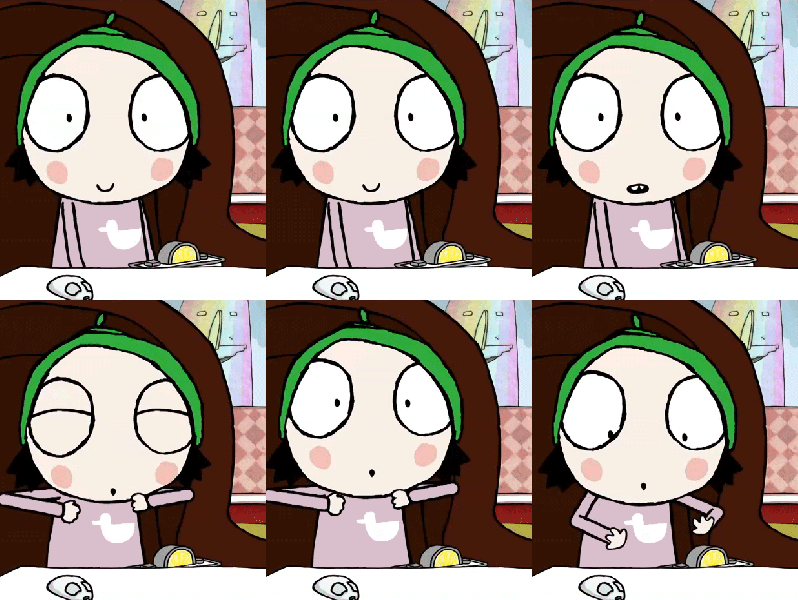
A few weeks ago, I went to London. I love London, among other things because I fucking love London. There are lots of reasons for this, some more personal than others, but high on the list is the fact that London is a book city, so much so that it makes me feel like this:

Animated GIF of Sarah's excited reaction from Sarah and Duck

-Sarah’s excited reaction. From Sarah & Duck.

It’s not that we don’t love books in the States. I was a bookseller for ten years before I became a librarian and I can tell you right now that there are lots and lots of Americans who love their books. We fundraise for libraries and champion literacy like champs. I can’t even walk down the street wearing my Reading Rainbow tee-shirt without someone asking me where I got it. (Here, in case you were wondering). But that’s not quite what I mean.

Picture of a pile of books bought on my most recent trip to London, for Book Lust London post by Malin James

Most of my recent haul.

It’s the difference between a lot of wonderful, book-loving individuals scattered across more 2,600 miles of geography and a country that televises the Man Booker Prize because there are betting pools and it’s serious. It’s the difference between book clubs discussing a summer release and two guys throwing down in a pub over whether you’re a “pretentious, fucking twat” for having read Ulysses or an “ignorant fuck” if you haven’t. (I overheard that debate, and it was awesome – super critical in the most un-bullshit way I’ve ever seen).

But even that can be found in the States (though probably not in a bar). For me, what makes London a book city is that fact that there are bookstores everywhere, from chains to tiny independents, and they are full of books – not sidelines, CD’s, toys, games and books. Just books. I like that you can ask booksellers what they’d recommend and trust that they have an informed opinion. I like that bookshops in London range from hodge-podge collections in stores smaller than my grandmother’s house to polished, muti-floor giants you could spend the whole day in.

Here’s the thing. I come from a city that is famous for its literary heritage thanks to Steinbeck and Burroughs and Kerouac. But bookselling and publishing have changed so much in the States that even a city like San Francisco can’t support more than a handful of scrappy, often struggling independents. And yes, I can order almost anything I want on Amazon and I can download everything else onto my Kindle (though my brain refuses to fully engage digital text). It’s not that I can’t get anything I want because I can. I just can get it in a way that feels real.

I can’t walk a mile and hit a couple of bookshops on my way to somewhere else. I can’t spend ages meandering sections and pulling (way too many) books off the shelves before handing a nice person money so I can take them home with me now. That sort of experience is a luxury like clotted cream and sleeping past 8am. And I’m not sure I’d want to that to change.

I say not sure because if someone told me that I could live in London I’d move. Like, yesterday. But no one is going to give me their flat anytime soon so I like enjoying the specialness of it. Because it is special to me. Books are tactile things – the massively cliched but totally distinct scent of paper and ink is a thing, and so is touching the object you’re going to buy. The real value of brick and mortar bookshops is that they foster a tactile relationship between the book and the person who buys it. And, because I’m a romantic, I want to enjoy that relationship, even if I only get to taste it now and then – especially if only now and then.

Don’t get me wrong. I wish the book business in the States was more boom than bust, that there were more prizes and more interest in shortlists. I wish there were more independents staffed by people who hand-sell titles because they fucking love that book. I wish I could stroll down the street and come home with something random that I can’t wait to read. But I can’t, at least, not living in a suburb of a lovely city that is struggling to hold onto the few bookshops it has left.

That’s one of the reasons I love London so much. I will never get to all of the city’s bookstores let alone all of the shops in the rest of the country, but I love that they’re there, all dreamy and wonderful to think about. Books in London are a treat and I like it that way, even when it means dragging luggage that weighs 9,000 pounds through the tube, and waiting longer than I’d like to be there again.

Gateway Books

Woman waiting for metro behind a wrought iron gate for Gateway Books by Malin James

Over the Passay Station by Yanidel Street Photography

My daughter was home sick the other day, so I didn’t get much work done. Fevers require snuggling in this house and snuggling isn’t compatible with documents and laptops. Not that I minded – while she snoozed like a sleepy kitten (very well snuggled), I spent most of the day reading, something I love to do but rarely get to indulge in for long stretches.

I pulled Kate Atkinson’s Case Histories off the shelf at random, mostly because I had to get the girl settled so I didn’t have time to mess around choosing. I had tried Life After Life around Christmas because everyone told me I’d love it but, for some reason, I just couldn’t get into it, so I put it down after 100 pages. This is after trying Behind the Scenes at the Museum a few years before with similar results. After two failed Atkinson attempts, I’d pretty much decided that she and I were not meant to be, but I tend to give authors a three book shot. If, after trying three different books, I still don’t want to read them, I figure it’s a miss, no matter how much I should love them. Case Histories was my third and final shot at Kate Atkinson and I’m so glad I didn’t stop after the first two.

Case Histories is a (freaking gorgeous) literary detective novel. I’m still basking in the geeky afterglow so I can’t critically parse out how I feel yet, but suffice it to say that I loved this book. It impressed the hell out of me in pretty much every writerly way. Plus, Atkinson’s use of point of view and voice are amazing. Plus, it made me laugh and almost made me cry (that’s a big deal – I cry all the time at movies, but I’m tougher with books…though The Time Traveler’s Wife made me sob like a baby).

In other words, Case Histories was my gateway into Atkinson – the book that made me click with the author so that I suddenly want to devour everything she’s written, including the books I’d rejected earlier. This sort of thing has happened a lot for me over the years. I couldn’t stand Margaret Atwood until I read The Blind Assassin (oh, my god, so good). Now, she’s one of my favorites. Same thing with Sarah Waters. I tried to read Tipping the Velvet three times before I gave up. Then I read Affinity and couldn’t put it down, so I tried Tipping the Velvet again and binged it in two days.

The gateway thing doesn’t just work with authors either. I’ve had it happen with genre too. Sometimes, the revelatory book is an exception, like my love of Iain Banks’s Use of Weapons defying my general apathy towards science fiction. But in other cases, a gateway book cracks open a whole new world of experiences. I still remember reading a short story by Remittance Girl in my twenties. I’d never liked erotica but I read this by chance, and suddenly got the genre. That story is why I started writing it.

I’m not sure that I have any conclusions to make, outside of the fact that I think gateway reading experiences are kind of fabulous. I’m a really active reader – when a book or an author engages me, they engage me hard. It doesn’t happen all the time, so when it does, when I book opens me up to an author’s back catalog or a whole new genre, it’s exciting. I like being introduced to new things. I like having new obsessions and things to honestly gush about. Adding Kate Atkinson to my list of gushable things was a lovely surprise, and I don’t ever want to be the kind of person to turn lovely surprises down.

The Redemption of Galen Pike by Carys Davies

GalenPikeCoverOn Stories that Undermine Assumptions

Carys Davies’s second collection, The Redemption of Galen Pike, is one of those books that I raced through in one go, and then went back and read more slowly over the course of the week. Granted, this book is short (131 pages) so my all-in-one-go read isn’t that impressive. That said, the fact that it hooked me that hard is.

This collection gave me that weird, awesome, anxious feeling that you sometimes get when there are too many choices on a menu. It’s exciting, and the thing that makes it exciting is really cool and kind of rare – every single story in The Redemption of Galen Pike sets up an expectation and then thoroughly subverts it.

This is a tricky one to keep spoiler-free, so I’m going to focus on just one of the stories and hopefully not spoil too much. “Wicked Fairy” is one of the quieter stories in the collection. While they all defy expectation differently, “The Wicked Fairy” does it with a sort of ironic silliness that carries you through, even though you know how it’s going to end.

We open with the narrator, a guy named Lenny, noticing a girl at a wedding. She’s dark and thin and she’s carrying a pie. Over the course of the next two pages, Davies creates a sort of Atwoodian (I’m totally making that a word) dystopia, wherein this girl with the pie is a silent, unnoticed threat. Except that Lenny notices. He notices but doesn’t say anything, not even when the voice in his head screams “LOOK OUT DON!!! THERE’S A GIRL HERE WITH A PIE!!!!”

When she finally throws the pie, its impact on Don’s face reads like a gunshot, and you’re left with the image of social horror – a horrified crowd and a pie-covered groom and a dazed, empty-handed girl, standing there as if she’s shot him.

I love what Davies does with this. In films, this kind of scene usually unfolds in slow motion and ends in an assassination. So what’s Davies doing when she assigns all of those JFK cues to a jilted girl with a pie? She’s playing two things off each other.

The first is the seriousness of the jilted girl’s feelings. She wants to hurt Don and she’s going to do it…with a lovingly described cream pie. And that pie is the opposite of serious.

In playing those two things off each other, Davies sets up a situational dissonance ie: the is really serious!…but it’s a pie.  The pie itself is the subversion of an expectation – one that involves real violence and tragedy. And yet, the pie is never treated as anything but a very real threat. So, in the world of the story, she might as well have pulled a knife.

So, what’s the point? Here’s how I read it. In subverting the seriosity of a familiar situation, Davies is implying that pie or no pie, the girl’s hurt is a powerful force. The fact that she doesn’t actually hurt him is beside the point. Within the context of the narrative, the social damage she’s caused is equally violent, which makes it a great commentary on the importance people place on big, elaborate weddings, rigid social structures and the power of public humiliation. All that from subverting one assumption – oh, no! She has a gun! with a different, equally threatening (in the story’s context) reality – oh no! She has a pie!

I’ll be honest, I laughed both times I read “The Wicked Fairy” because, for all that geeky analysis, it really is funny. As one of the lightest pieces in the collection, it did a great job of quietly satirizing all sorts of things while giving the reader a bit of a break. Some of the other stories are beautiful, powerful heartbreakers, all of which are so worth reading. In fact, however, you end up reading it, this collection is very much worth reading.

Small Fiction: Cold War

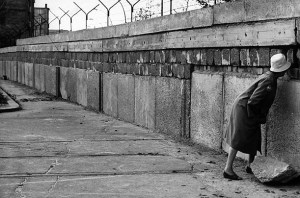
Black and white historical photograph of a woman standing at the Berlin Wall circa 1962 for Flash Fiction: Cold War by Malin James

Berlin Wall, c. 1962

She was prone to overthinking. Aggressive, determined thinking  formed a wall around the process of life, which she could not control. She deployed distractions and analysis with Soviet subtlety, creating, over time, a network of protections. One department no longer knew what the others were doing. Left hand fooling the right.

She did this cloak and dagger for years – years and years and a lifetime – until cuts were made, and a colder, less stable government dismantled the agency of her cognition. Even concrete crumbles with age, but habits are hard to break, especially the girders in a foundation. The woman became a mouse in the concrete wall, sealing the cracks up with crumbs.

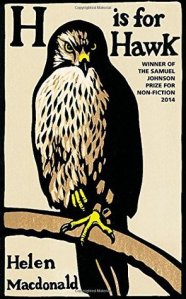
H is for Hawk by Helen Macdonald

H is for Hawk

On Narrative Flow

For my first official post on Reading Like a Writer, I want to talk about Helen Macdonald’s memoir, H is for Hawk.

I almost called this post “In Praise of Narrative Flow” because that’s what initially pulled me into H is for Hawk – Helen Macdonald’s crazy-natural use of narrative flow.

But before I get into that, I should say up front that I kind of loved everything about this book. In a very personal way, it was exactly the right read at exactly the right time, so I can honestly say without any reservation that it’ll probably be one of my favorite books of 2016.

Now, to get back to narrative flow. What I mean by narrative flow is how the writer’s use of pacing, rhythm and execution, and how they interact with the reader. Here’s an example from Hemingway’s “Hills Like White Elephants”:

The woman brought two glasses of beer and two felt pads. She put the felt pads and the beer glasses on the table and looked at the man and the girl. The girl was looking off at the line of hills. They were white in the sun and the country was brown and dry.

Side Note: If you haven’t read Hemingway, goddamn, check out his short stories. I’m not a huge fan of his novels, but his short stories are a-maze-ing. He really was a master of the form.

So, narrative flow. This quote captures the tone of the story – staccato, disjointed and ambiguous. Things are said in this story through what is not said – the way the woman looks at the girl, the way the girl is looking off, the way the hills seem separate from the land. The flow is a little choppy, a little disorienting and that’s perfect because it mirrors the heat of the day and the girl’s state of mind. In this case, the narrative flow feeds into the story’s overall tone. It’s brilliant.

Helen Macdonald does something equally brilliant in H is for Hawk. Narrative flow is important regardless of what kind of narrative it is – fiction or nonfiction, short or long. Whereas Hemingway used flow to give his short story a visceral impact, Macdonald uses it to a different effect – she weaves a tapestry with it so the reader becomes wrapped in her grieving state of mind. And yet, the hawk remains firm and clear in the middle of her grief. The hawk is always the focal point.

The hawk had filled the house with wildness as a bowl of lilies fills a house with scent.

Macdonald’s imagery is threaded through her prose. It’s sensory and very specific. It also accurately reflects how thoroughly the hawk will come to define her life for a time. There are a million gorgeous quotes I could pull from this book, but they all have this quality – the prose is packed with more than words. Expand that out to the entire book and you get narrative flow.

There are two main threads in H is for Hawk and I’ll admit that, at first, I didn’t quite buy into one of them. In addition to her own autobiography of grief, Macdonald weaves in a mini-biography of T.H. White, the author of The Once and Future King, as well as, (more importantly for this book), The Goshawk, an account of his failed attempt to train a hawk. In the beginning, the White chapters felt a bit strange and intrusive. But slowly, they began to make sense. Slowly, they begin to reflect Macdonald’s fears and isolation as she trains her own goshawk, Mabel. The White chapters become critical to understanding the depth of Macdonald’s grief and how falconry becomes a metaphor for the process of healing.

They also act as a counterpoint to her relationship to her own hawk. White botched his hawk’s training horribly. Macdonald, by comparison, is hyper-aware of the bird, to the point that she begins to over-identify. As she does, the flow becomes leaner, tighter, and narrower, almost reflecting the pinpointed focus of the bird she’s training. Then, as the training progresses and she processes her grief, the focus slowly expands. The flow loosens. Macdonald’s narrative develops a rhythm that underscores her emotional experience. That alone helped me, as the reader, to connect to the book on a basic, instinctive level – it bypassed my brain and hit my emotions, which for me is where it counts.

And that’s the power of narrative flow – it’s a way to by-pass the reader’s logic and burrow under their skin. I’m sure there are other names for it, but that’s essentially how I think of the structural rhythm of a book. Some writers engineer it ahead of time, but that almost never works for me. When I write, the flow kind of just happens in the first draft. Then I hone it through revision and edits. Macdonald’s narrative rhythm feels so natural, so deeply tied to the text, that I wonder how much of it was engineered and how much of it just happened. If I’m ever lucky enough to talk to her someday, I would love to ask.

Reading Like a Writer

Black and white photograph of a woman looking out from a clock tower for Reading Like a Writer post by Malin JamesI’ve been thinking about how I want to approach writing about books. I used to write fairly standard reviews and that was fine but, honestly, there are so many good review blogs at this point that adding my opinion doesn’t feel particularly necessary. I can talk about what I liked or didn’t like about a book, but it doesn’t bring anything new to the table. And who knows, maybe there is nothing new to bring, but I want to try.

The fact of the matter is that my opinions aren’t unique – they’re personal and informed by my experiences – but so are everyone else’s. Generally speaking, my opinion doesn’t carry much weight for a person who isn’t me. That’s why I’m going to avoid the temptation of giving a general opinion and focus on something specific instead, something informed by the way I read.

The way I read has changed a great deal over the years. I used to read purely for entertainment. Then catharsis. Then curiosity. Then entertainment again. At this point, I read all across the board for a lot of reasons and, while I’m attracted to a different kind of book than I used to be (more on that in a post of its own) the fact is that I read widely from all sorts of genres and styles for all kinds of reasons. The only through-line in my reading is that I have an agenda. In addition to reading because I love to read, I read to become a better writer.

Even when a story has completely gobbled me up, part of my brain is whirring away, deconstructing and noticing and trying to figure things out. I love the craft of writing. I love technical elegance and subtle, inventive structures. I love the little mechanisms that make, or fail to make, a piece work. Sort of like a person who disassembles clocks, I love to dissect stories to see how they tick.

I’ve always done this to some degree, but the habit got formalized in college and grad school when I started applying theory to what I read. Later, when I started teaching myself how to write fiction, I applied the same principle. I found writing books that emphasized reading for different aspects of craft, from characterization and structure to pacing and voice. Slowly, I habituated myself to noticing these thing regardless of what I’m reading. That was more than twelve years ago, and that anatomical approach is just how I read now.

That’s why I talked about the structure Sarah Waters used in Night Watch and noticed the different way Muriel Spark manipulates the reader in The Driver’s Seat. It’s why I love Helen Macdonald’s use of a loose narrative style in H is for Hawk (there’s a post coming up on that). It’s not about me being all Miss Fancy Pants – it’s just the way I enjoy books.

So, rather than blog my general opinion, as scintillating as it may be, I’m going to write about the book from a writer’s perspective, hopefully in a way that isn’t totally boring for non-writers too. If nothing else, it’ll give me a chance to talk about two of the things I love most – stories and how they’re made.