Small Fiction: Memory Palace

Photograph of a wealthy abandoned house with broken chair in the foreground, for Memory Palace by Malin James

From Matthias Haker’s Decay series

She looked up at the dripping world. Water dripping from dripping skies only to disappear into the gray-green grass. The water did not saturate. It disappeared into the grass, which was full to the brim with emptiness.

His shoes, worn out New Balances that collapsed, unable to hold their shape without a foot, were empty, unable to bear up. His Apple mug from the eighties was empty, as was his particle physics cup. She wished she hadn’t washed them yet. He’d them bought for nostalgic purposes. Not nostalgia. Nostalgic purposes. Because that’s the way he’d talked.

He’d liked things that had purpose, things that held memories were all right, but better yet if they also information or reminders of coffee or M&M’s. Even things that held memories should do something more than gather dust like his mother’s porcelain squirrels.

Their house full is full of things with purpose. (His mother’s squirrels went to a charity shop, after she died). Now he is gone and his shoes are empty, but she has his mugs…. She has his things with purpose, that have, just recently, acquired a new one. They must organize her memories of him. Half-finished books bought on that trip to Sonoma, the cord to an old cell that he kept in a shoebox, just in case, (“just in case” could be a worthy purpose). She would keep his favorite gin. She would keep his dark-roast in the jam jar. She would not consume them, for to do so would be to steal them from their purpose.
Small Fiction: Cold War

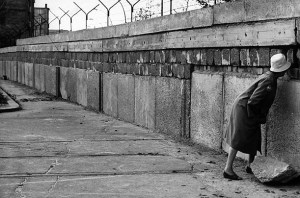
Black and white historical photograph of a woman standing at the Berlin Wall circa 1962 for Flash Fiction: Cold War by Malin James

Berlin Wall, c. 1962

She was prone to overthinking. Aggressive, determined thinking  formed a wall around the process of life, which she could not control. She deployed distractions and analysis with Soviet subtlety, creating, over time, a network of protections. One department no longer knew what the others were doing. Left hand fooling the right.

She did this cloak and dagger for years – years and years and a lifetime – until cuts were made, and a colder, less stable government dismantled the agency of her cognition. Even concrete crumbles with age, but habits are hard to break, especially the girders in a foundation. The woman became a mouse in the concrete wall, sealing the cracks up with crumbs.

Small Fiction: The Couch

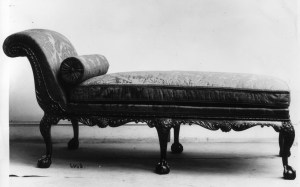
Black and white historical photograph of a 19th century chaise lounge for Flash Fiction: Grounded by Malin James

19th c. chaise lounge

She sits on the  dubious comfort of a well-intentioned couch. It had once been roly-poly, but its horsehair stuffing had been flattened by time and use. Now, it was a child’s drawing of the thing it’s supposed to be.

Equally dubious, she sits on the aspirational couch and allows Dr. Salt to prod at her equally flattened softness. Resentfully, she feels her stuffing begin to ooze. She sets her jaw and jams it back in. She does not like Dr. Salt, but she had promised Henry. Sadness has made her difficult to live with.

Dr. Salt’s techniques are reasonable, but they strike her as somewhat sinister. He calls them “grounding”, as if she were lightening that must be bottled.

How does the couch feel, Dr. Salt drones. Tell me, how does it feel?

Dr. Salt, she thinks, looks determined.

“Dead”, she replies. She is determined too, and it shows on her face, which is cool, and smooth, hard. Very unlike the couch.

Dr. Salt’s brow furrows with clinical concern. She frowns and sees that she’d better explain.

“The couch is an object, Dr. Salt. In terms of feeling, it’s a dead thing. It has no nerves, no skin. There is nothing to hurt. Or is that not what you meant?”

Dr. Salt is quiet.

She plucks at a loose thread in the brocade, certain that she is not causing pain.