Small Fiction: Cold War

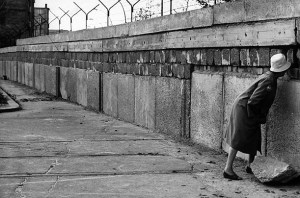
Black and white historical photograph of a woman standing at the Berlin Wall circa 1962 for Flash Fiction: Cold War by Malin James

Berlin Wall, c. 1962

She was prone to overthinking. Aggressive, determined thinking  formed a wall around the process of life, which she could not control. She deployed distractions and analysis with Soviet subtlety, creating, over time, a network of protections. One department no longer knew what the others were doing. Left hand fooling the right.

She did this cloak and dagger for years – years and years and a lifetime – until cuts were made, and a colder, less stable government dismantled the agency of her cognition. Even concrete crumbles with age, but habits are hard to break, especially the girders in a foundation. The woman became a mouse in the concrete wall, sealing the cracks up with crumbs.

Fiction: Nighthawks

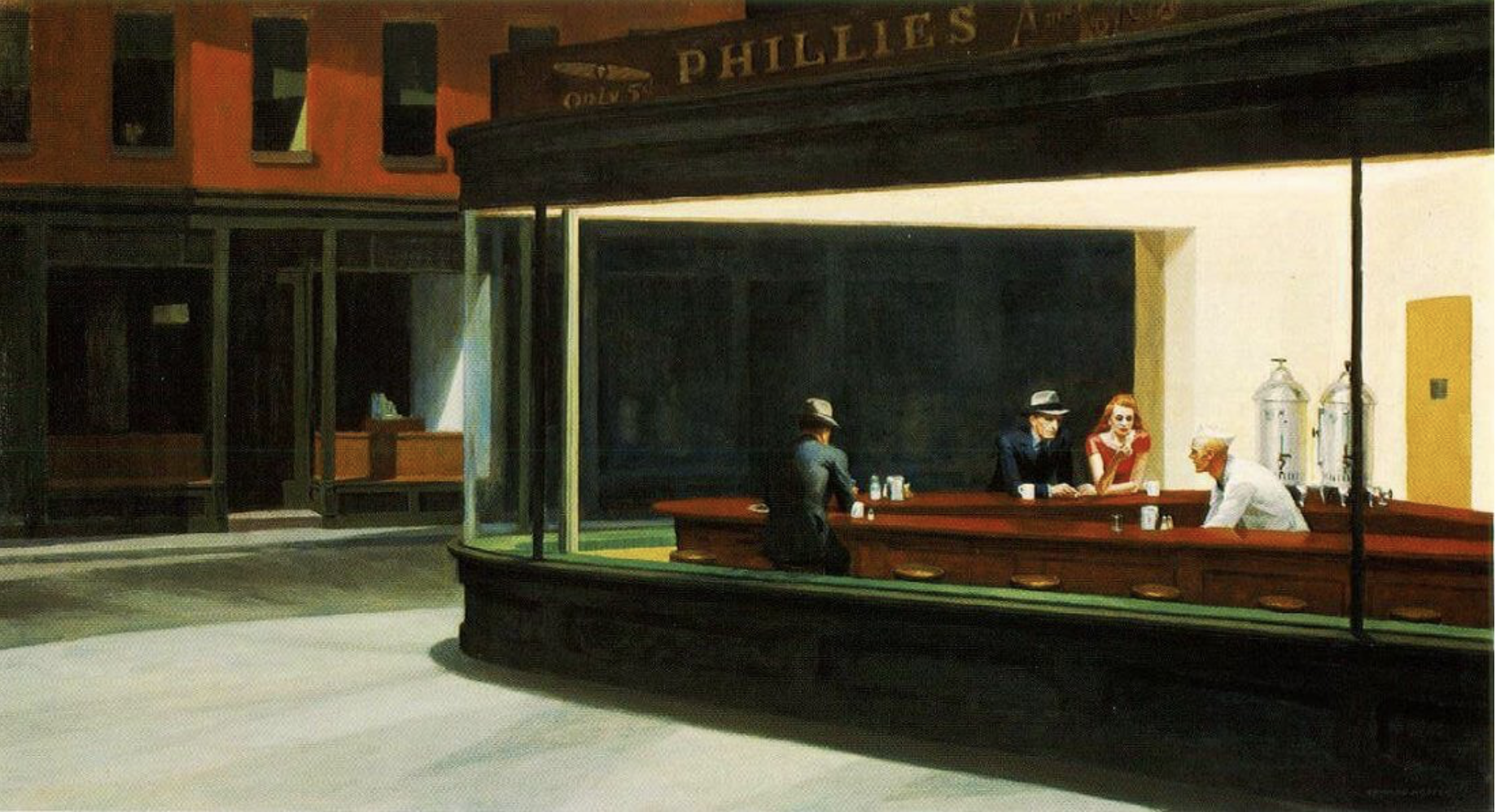
Nighthawks by Edward Hopper, 1942

Rose

Rose looked at her reflection in the polished mahogany counter. She didn’t look good. The day had caught up to her, stripped her color and sharpened her face. She dabbed at her lipstick with a napkin. Too red. It looked funny. Rose put the napkin down. She used to like that red. So had Eddie. Eddie had liked that color.

Red, red lips for my red, red, Rose….

Rose’s hand plucked at her earring, her coffee, her locket, before inching over to rest on Rob’s sleeve. She liked the feel of his woolen jacket under her quick, nervous fingers. Nice and warm. Solid. Rob. She sighed. It had been a long day. It was time to go. She wanted to say that. It’s been a long day. It’s time to go. But his downcast eyes trapped the words in her mouth. He wasn’t ready yet. She could wait.

Widowed at thirty. Thirty was too young for how she felt. For how she looked too. Her reflection looked worn out and old—not pretty anymore. Her eyes slid to the floor. She didn’t really care. Everyone was dead. Eddie was dead. The baby was dead. Her father—hers and Rob’s—was dead, but that was nothing to cry about. Their father had been a lucky son-of-a-bitch.

Rose glanced at her brother and stopped the thought, just in case he read her mind. Sometimes he could. He couldn’t, not really. But sometimes he knew. She couldn’t read his either, but sometimes…. She clutched her thick, glazed coffee mug with both hands, prepared to wait.

It’s been a long day. It’s time to go home.

She looked at Robbie’s profile, his hawkish face, and quietly looked away.

The dead weren’t lucky, but she felt like they were. She couldn’t say that to anyone, especially her baby brother. He didn’t need to hear it. He’d done enough already – more than she wanted him to. He’d visited her in the hospital and tied pink ribbons around her wrists. He came by or called every day. He worried so much. She made him worry.

You worry, Robbie. You worry too much.

She was tired. It was time to go home.

Rose sighed, a small, shallow breath. Everything was done. This time he’d have nothing to find. Poor Robbie.  She was glad they’d spent the whole day. Rose fingered her locket. The gold was warm. It felt soft when she pressed it. There was a picture of Eddie and the baby inside.

She glanced at her brother through her sweep of red hair. Red, red hair. Red, red Rose. Rob’s comfortable silence was the only thing she would miss. His face looked dark, like a shuttered house. No lights. Locked doors. She had to wait for him to be ready. They would sit together in this in-between place, coffee cold in their cups. When he was ready, he would take her home, and then she would go to Eddie and the baby. She loved her brother. She could wait.

Robert

Robert knew that she was going to try it again. He could read it like newsprint in the lines around her mouth. He missed her smile, her real smile, her cracking, half-cocked grin. He hadn’t seen it in months. Instead he got what she gave him now…pale lips under too much lipstick. Her hand was cold on his arm.

She’d gotten dressed up for their day out, special occasion dressed up—Hayworth hair, her favorite pink dress, she’d even worn perfume. But her bones were sharp beneath her collar. Her wrists were thin and hard. He wished she’d worn a sweater. It was turning cold, too cold for a thin, silk dress.

Why don’t you bring a sweater, Rosy?

I’ll be okay.

The second she’d said that, he’d known. That dress, her hair, her too bright face…he’d known exactly what was coming, and he didn’t want to know.

He lit a cigarette and let it burn. Tiny column of ash. Then he lit another. Beside him Rose shifted, patient, silent. She wanted to go home.

See you tomorrow, Rose

I love you, Rob.

Robert sipped his coffee. He should say something. He should stop her. But, Jesus, she looked spent up…. Rob glanced at his sister, though the sweep of her strawberry hair, but he couldn’t see her face. He wasn’t sure he wanted to. Robert signaled for the check. It was time to take her home.

“More coffee?”

Robert paused.

The waiter poured.

One more cup.

Charlie

Wish that kid would quit staring and do his job. Goddamn coffee’s cold.

Across the diner, the old man hunched over the counter like a bulldog over a bone. He eyed the yellow-haired waiter, who was eyeing the redheaded girl. Like staring was going help her. A gal like that never left her man, not if he beat her into the ground. After thirty years he knew.

Charlie rubbed his bum knee. He wished he could sleep. He hadn’t slept since he’d retired. Not a full eight hours. Not in a month. Best wishes, Charlie! Retirement—you lucky son-of-a-bitch!

Yeah. Real lucky.

Charlie leaned back on the hard stool, regretting the watch the boys at the precinct had given him. He hated fishing, hated crosswords. His buddies were still on the force. Doris was remarried and Katie was busy, making a life of her own. She’d even gotten a job—secretary at some firm. Smart girl. Katie had always been smart. Maybe not pretty, but smart. He could hear Doris telling her to dress up nice for work. Christ, he wished Doris would shut-up.

Charlie shot the waiter a look and clacked his cup softly. The kid strolled over, refilled it from the urn and handed it back to him. Up close, Charlie realized, the kid wasn’t much of a kid. Pushing thirty, he’d bet. Charlie grunted. At twenty-six, he’d already been on the force for five years. Guy should get a real job.

Charlie looked out the diner’s plate-glass window at the dark, disinterested street. What did you do when you got cut loose?  Kid’s got his whole life and he wastes it, like it’s something to toss away. The old man shifted. He was starting to hate that kid….

He should probably head home. It was a long walk back to his place. Maybe that would wear him out. He reached for his wallet, straining the seams of his suit. Cheap suit. Work suit. He took out his Luckies instead. One cigarette. One more cup. Then he’d toss a buck on the counter and take the long walk home. Back to his apartment. He hated that apartment. He hated the way it looked—half empty, full of nothing worth saying, like old newsprint. He hadn’t seen it that way before. He hadn’t had time—he’d barely ever been home. Now he saw every night. Charlie sucked the hot coffee between his teeth.

Christ, he wished he could sleep.

Joe

That lady looks sick. Joe glanced up from a tray of half-empty saltshakers. What’s she doing out so late with that guy, anyway? She looks like she should be in a hospital or something….

Joe shook his head and refilled the shakers without taking his eyes off the lady in the pink dress. He was good at working and watching. He never spilled.

Look at how she’s holding his arm, he thought. Like she’s gonna drown and he’s the only thing keeping her afloat.

That was good, Joe thought. He had to write that down. He stopped pouring and wiped his hands before getting out the little notebook he kept in his apron pocket.

He loved working the late shift. Nothing like it for writer’s block. Nothing like it for inspiration. The lady and her fella were great. He had to use them somewhere…maybe he’d put her in a sanitarium and make the guy her lover. And the guy… a private eye with a shady past? Maybe he broke her out and now they’re on the run. However Joe wrote it, it was gonna be tragic. That lady was tragic all over.

Joe glanced across the counter at the old guy sitting on his own. Not much there. Just a sad sack. He wasn’t as compelling but Joe could work with it. Maybe a tired crime boss or a has-been reporter. Joe studied the man nursing his hundredth cup of coffee. Thickset. Stubborn build. Angry mug. Joe nodded and grinned. He’d make the old guy the redhead’s father. Iron fist with heart of gold.

The old guy shot Joe a belligerent look.

Skip the heart of gold.

Joe shrugged. Even after he’d sold the novel, he’d still work the graveyard shift. He loved the diner at night. Nothing like it for writer’s block. Nothing like it for inspiration.

Joe pulled out a pen. Down the counter, the man paid the tab and helped the lady up. She stumbled. He caught her. Joe bent over his notes. He barely looked up as they left.

THE END
Portrait: Jean the Ambiguous

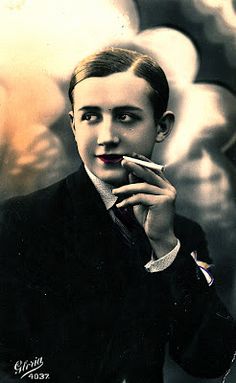
I love androgyny. I always have – from Marlene Dietrich in a tux to David Bowie in anything – androgyny is beautiful to me. It’s been a while since I posted a bit of fiction, so I dug into the archives, (i.e.: the ancient, dusty files on my hard drive), and unearthed this character study. After a bit of dusting off, I remembered by I’d written it – I rather love Jean. In fact, Jean will very likely end up in a story of Jean’s own. In the meantime, however, here’s a sketch of the fabulous Jean, who defies the constraint of labels and gender. 

Jean the Ambiguous

androgenous jeanOne can only begin to description of Jean by saying that Jean is French. Though Jean’s nationality has little practical bearing on Jean’s personal behavior (aside from a certain pronounced flair), the fact the Jean is French factors into a separate, pivotal, matter—the interpretation of Jean’s name. Or, to put it more succinctly, the choice of pronoun one uses reference to Jean.

You see, the French spelling of “Jean” is not “gender specific,” and neither, really, is Jean. If Jean were only English, (or American in a pinch), the ease of gendered spelling would see one through—“Jean” or “Gene”, “he” or “she.” The question of pronoun would cease to exist.

Ironically, the ambiguity of Jean’s name is a perfect reflection of Jean, which, though prickly to admit, is the root of the difficulty. One must also admit that a contributing factor is Jean’s stubborn (though admittedly suave) insistence on not offering any definitive evidence as to gender in either dress or manner. Allow me to clarify.

Jean is tall and slender – tall for a woman (though not unthinkably so) and quite average for a man. Jean’s hands are fine-boned, with long, rather sensitive looking fingers – Jean has the hands of a fine woman or an accomplished musician. Unfortunately, Jean’s income and fame are entirely due to the virtuosity with which Jean plays the violin, so there is little help there.

That’s all fine and good, you must be thinking, but one can surely tell a person’s gender from his or her manner of dress! In answer to this, I’ll admit that it’s true in most cases. But Jean’s manner of dress is unconventional for either sex—tailored suit with a flared coat; French cuffs and lovely jeweled links; a snowy white shirt with a ruffled front; dramatically high collar; crisply knotted tie. The lacquered longish hair adds to the confusion. Is Jean a woman with short hair, or a man with long? It’s impossible to tell.  The only thing one can say for sure is that Jean’s cologne, (or perfume), smells quite good.

So clothing is no help, and neither is bearing. There is always seduction in the large, smudged eyes; a feline smile on the pale, oval face. One moment, one is sure one has solved the riddle of Jean, only to see the picture change….

And so what is one to do? Ask leading questions? Jean smiles mysteriously, (or negligently or indulgently or flirtatiously), and one is dazzled but no closer to knowing which pronoun to use. And so the mystery continues, adding flame to the fire, and fueling the allure of the obsession that is Jean.

Note 3/16/14: Just this morning, I received the lovely news that this post was given the Gender-Bender Award by the lovely mind behind Tiffany’s Non-Blog. Needless to say, I’m quite honored that a character I’m so fond of turned someone’s head in such a wonderful way. Thank you so much!

gender-bender-award1

Agnes, The Maid

This is a short portrait / character sketch. Sometimes it happens that I get a character without a story. Usually it’s a character I quite like and will come back to later, either in their own piece, or as a tertiary character somewhere else. Agnes is one of these characters…

Agnes, The Maid

No one used a feather duster like Agnes. The command with which she wielded a batch of feathers shoved into a stick was truly terrifying. Even the mistress stayed

out of her way, not daring to test the sideboard after Agnes had been through.

Agnes was a narrow sort of woman, rather like an obelisk, with an air of authority that made her seem far taller than she actually was. Even as a child in the first blushes of youth, there had been little of the girl and even less of the blush about her. She was made of serious stuff. Lest you forget, the line of her mouth would remind you, before her shoulders squared off like a coat rack, and she took up arms against the dust.

Serious as she’d been as a girl, Agnes had had hopes – hopes that had been dashed quite early on in her career as a person. As a girl she had wanted to join the cavalry and go to war like her father, who’d been a sergeant in the Boer Wars. When her father had informed her that daughters did not join the cavalry, that this honor was only for sons, and that even if they did join the cavalry, his daughter would certainly not, Agnes had cried for hours. It was the last time in her life she would cry.

Finally, touched by his daughter’s rare show of emotion, Agnes’s father relented upon one nonnegotiable condition. If she were determined to go join the army, it would be the infantry for her. No “prancing about on ponies” – not for his girl. She would charge into war like a man. Though she was by no means un-heroic, the “ponies” had rather been the point. But her father would not be moved. She joined domestic service instead. Agnes never forgot her dream though. It was her one great disappointment. It would affect her, subtly, for years.

Despite her lowly role as maid, she wore her uniform with military precision. The sheer force of her personality endowed her ruffled cap with an air of authority, as if the cap knew itself to be overly frilly, and had tried to sharpen up. She took orders and conveyed orders with the bearing of a much older person. And, of course, the house had never been so utterly free of dust.

Agnes rose efficiently through the ranks to head housemaid after only two years, and it was assumed that when the housekeeper retired, Agnes would take up the helm. With the confidence of authority, Agnes felt this to be true. She was, after all, a nearly perfect servant. Her only flaw was the aggression with which she dusted the house. It called to mind a general, spitting on enemy armies before crushing them in his, (or her), wake.

Tank, or Gentleman Scholar

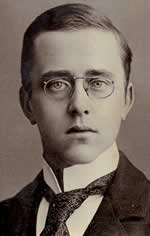
Image courtesy of http://en.wikipedia.org

If there were ever a man like a mountain, Tank was not that man. Physically, he was more of a molehill, though his intellect towered over men three times his size.

Upon his birth, Tank had very nearly been named Theodore for his mother’s favorite brother. But Tank’s father, in a rare burst of filial interest had insisted that he should name his son, and that his son’s name should be Tank, not for any particular reason, except, perhaps, that he’d been drunk.

Despite the name’s dubious implications, it had gone on the birth certificate, and so Tank had been “Tank” for the entirety of his life, save, in quiet moments, when his mother had coo’d “Theo” in his ear. It was the distant memory of his mother’s voice that sallied him through years of quizzical looks and disappointment, (on his father’s part, at least), for the fact that his physical prowess failed to match either his name or his mental acumen.

How he would have loved to be Theodore – perhaps then he wouldn’t have been quite such a disappointment. Theodore’s did not lay bricks for a living, nor did they brawl or curse or spit. Theodore’s sipped brandy in book lined rooms and thought important thoughts, pausing, only briefly, to write the most important ones down. Theodore’s became scholars and architects, and left the brick laying to men named Tank… though not this particular Tank.

In awesome defiance of his father (and to his mother’s quiet pride), Tank excelled academically. His first very good school led to a second very good school, which in turn led to an impressive university career. It was at university that Tank discovered, and pursed, his love of etymology.

Tank’s calling found him one afternoon, as he was researching his own name. It was indeed true that the verb form of “tank” meant “drunk,” and had since 1893, but the noun form held a special light of hope. In the original Portuguese (brought west by way of India in 1616, from the Gujarati “tankh”), the word referred to an underground reservoir of water, and it was to this idea of hidden depths that Tank held firm.

His desire for Theodore slowly waned beneath the weight of his etymological studies and academic success. By the time he published his magnum opus, a thirteen volume tract called simply, Names, Tank was at ease with himself and his once dubious moniker, signing notes of thanks for various scholarly offers and congratulations, With Most Cordial Regards, Dr. Tank McGuinness.