I don’t know about you, but 2025 has required some comfort reading. There have been days when I wanted to crawl between the pages like Peter Rabbit after his mama tucks him in with chamomile tea. That’s when a lot of us re-read favorites, but what if that doesn’t work?
Flying without the emotional safety net of Peter Rabbit’s chamomile? You don’t have to. There are ways to uncover bespoke, new comfort reads, even when you’re stressed. It starts with two questions.
Question One: What am I reaching for when I reach for a “comfort read”?
Question Two: What would be comforting right now?
Let’s start with the first question. “Comfort” means different things to different people at different times. For example, Dracula always worked for me because it evoked my cozy, perfect first reading at sixteen. Agatha Christie also worked because her mysteries engage my little gray cells in puzzles that has nothing to do with what’s causing my stress.
Both answers give me places to start. 1. books that evoke a comforting time or experience and 2. Books that distract my stressed-out brain.
Now, for the second question. What would be comforting right now?
This can be a little harder, because if you knew you wouldn’t be asking the question. So, here are a few ways in.
Experiment with books, genres or subjects that are straight out of your left field. Try sifting through a “Best Of…” list. Try a title that you’re a little ambivalent about. I don’t read a lot of political writing, but Abundance by Ezra Klein hijacked my brain with different problems and their possible solutions. Bam. Mental distraction.
Mine your TBR. Like, go deep. Find that book you bought for a $1 in 2017 and give it a try. You of 2017 may have left a great escape hatch for you of 2025.
Rampant nostalgia. Go back to books from when you were a kid. Get them Goosebumps. Binge the Baby-sitter’s Club. Revisit A Wrinkle in Time because, let’s face it,It is a dark and stormy night. Go back to your childhood shelves. It’s a PB&J for your feels.
Spoil yourself by reading backwards. Pick a book, flip to the back and read the ending. Then start it from the beginning. Don’t read to find out what happens. Read to see how it gets there. It’s a way to force your brain into different thought patterns. Try it! It’s weirdly engaging.
Go so far out of the box that you end up in a recycling center. Try webtoons. Try fanfic find what you’re looking for? Try writing it. You won’t be the only one with an Owl House shaped hole in your heart. Regardless of how you choose to engage, spend some time in a familiar fictional world. It might be the chamomile you need.
The main thing is to identify what you really need right now and let your readerly instinct guide you to where it’s hiding. Embrace the process and give yourself as much time and patience as it takes.
It’s taken me an embarrassingly long time to dig into contemporary Japanese literature. When I ask myself why, the answer is usually something like “uhh…translation feels a little scary?”, which leaves me feeling pretty dissatisfied with myself. Having acknowledged this as my starting point, I thought I’d share some titles that got me from “translation’s a little scary” to gobbling up authors like Banana Yoshimoto and reading manga with my teen.
It’s all about finding accessible gateways. This will vary per person, so these titles are only a starting point. There are amazing genre translations in mystery, romance (especially in manga), horror, fantasy, science fiction and what I tend to think of as “cool, speculative, slippery stuff”, so the sky is the limit.
Manga:
My Hero Academia by Kohei Horikoshi: Don’t let the yelling or flashy fights scare you away from this shonen masterpiece. These characters will make you feel, and it’ll give you a cultural keyhole into everything from school life, the collective good an appreciation for cold soba and mappo tofu.
Bungo Stray Dogs by Kafka Asagiri: This is the ultimate manga for book lovers. “Bungo” means “classical or literary Japanese”. All of the characters are named for writers in the Japanese and Western canons, and the mysteries are full of familiar references and tropes. If you want literary easter eggs and a primer in Japanese literature, you can’t beat it.
On the other, darker is anything by Junji Ito. If you’re into horror—body horror, literary
horror, paranormal horror, psychological horror, literally all the horror—check out this prolific horror manga artist. Although he’s easiest to find in the manga section, he’s also done full length works, novel adaptations, and illustrated short stories, so odds are, he’s done something that will make your skin crawl.
Light Novels:
The Apothecary Diaries: Specifically, the light novels by Natsu Hyuga, not to be confused with the manga. What’s a light novel? It’s just the novel version of a manga, (the versions often exist side by side) Personally, I find LN’s to be a little more accessible, given that I didn’t grow up reading back to front, but either way, you’re getting a great story.
The Apothecary Diaries features Mao Mao, one of the driest, most no-nonsense heroines I have ever read in any genre. The series follow Mao Mao, a young apothecary from the pleasure district to servitude in the Imperial Palace where she sleuths out mysteries like an impatient, poison loving Sherlock Holmes. It also features a super satisfying slow-burn romance with Jinshi, her not-quite Watson.
Short Story collections / Short Novels:
Before the Coffee Gets Cold by Toshikazu Kawaguchi. This is a collection of inter-related short stories that take place in a cafe in Tokyo where you can go back to a moment in time. This was a poignant, universal read that gave me a lot of strong, quiet feelings.
Revenge: Eleven Dark Tales by Yoko Ogawa. Ogawa has written everything from short, achy books like The Housekeeper and the Professor, to The Memory Police which is set in an authoritarian dystopia that made my stomach hurt. Revenge is a tight, mean little collection that gives you all the bite and darkness of a weird true crime series.
Kitchen by Banana Yoshimoto. Oh, my gosh, I love Banana Yoshimoto! You can’t go wrong by picking up anything she’s written, but Kitchen is my favorite. It follows the friendship between a young woman mourning her grandmother and the young man who invites her to live with him and his trans mother. It came out in 1988, but it feels shockingly contemporary, especially in the way Yoshimoto handles gender identity and the gray zones in relationships.
After Dark by Haruki Murakami. Murakami comes with a lot of baggage, so I hesitated here. But the fact is that regardless of baggage this short novel was insightful, engaging and fun to read. Everything happens over the course of a single night as we follow Mari, a young woman in a Tokyo Denny’s. There are surreal elements, but they’re woven in so tightly that I barely noticed. It’s a good place to start with a polarizing cultural powerhouse.
These titles are just the tippy tip of the iceberg. There are as many doors into Japanese literature as there are people interested in stepping through. Don’t let the idea of translation stop you from dipping in your toe. The water’s just fine.
I am not an archivist. I’m a consulting records appraiser, which is low in a departmental hierarchy, but I like it. I move on when my contact it up, and I’m usually ready. I was especially ready after six months at the National Archives.
My contact at the Archives was a well-intentioned post-grad named Maggie. Maggie was earnest enough to labor under the false impression that co-workers should bond. After six months, I knew more about her cat than anyone should.
Maggie was nice though and I liked her well enough, so we arranged to have lunch on my last day. We were on our way out the door when a gaggle of archivists called her name. They were celebrating someone’s promotion and wanted to know if Maggie could join them. Maggie looked torn and it got awkward real fast, so I jumped in to tell her to go ahead.
I was people’d out and happy to grab a sandwich on my way home, but Maggie is a social person and can’t imagine anyone being happy eating lunch alone with a podcast. Before I could stop her, she asked if I could come too.
There was an even more awkward, agonizing pause before a mulleted ape of an archivist said, (really grudginly) “yeah, like I guess. If she wants to”. The implication was very much that she hoped that I wouldn’t want to. The subtext was so textual that I smiled brightly and said “I’d love to come.”
Petty? Absolutely. Plus, I most certainly would not have loved to come, so I screwed myself over too. I was just reactively pissed. It’s not like Martha Lynn Baxter (the archivist ape) and I were strangers. We had worked together, (albeit unpleasantly), for six months, and I was standing next to her well-marbled ass when she extended her grudging invitation, so I’m petty, but she’s rude. Screw you, Baxter.
Zelda, who was also in the room, met my eyes. Zelda is my mountain lion. We’ve always been together. When I was a girl, she was a cub. Now that I’m in my thirties, she’s a lithe, fully grown puma, (no fucking courage jokes, please). This sort of thing runs in my family. My mom has a cheetah named Richard. They’re in their golden years now, so they bustle more than run, but they’re just happy together. That’s how it is with me and Zelda. Content to be on our own….
Anyway, now our tolerable one-on-one lunch had turned into a clusterfuck of a group activity. At least they were going to a Greek place. Zelda loves Greek.
The whole gaggle trooped to the restaurant in two’s and three’s. I walked with Zelda behind the main group. It was actually kind of sweet the way they marched down the street like homeschooled kids on a fieldtrip. Not having lunch at their desks was clearly a big deal.
The restaurant was super small, so the waitress with a bobcat girded herself as the archivists dove for seats, jockeying for position like it was high-stakes musical chairs. I hate musical chairs. I waited for the feathers to settle and took a seat at the end of the table. Zelda curled up at my feet.
Spare staff hurried out with flat bread and fresh olives, which were absolutely delicious. Much to their credit, no one stepped on the tawny tail sticking out from under my chair. Meanwhile, the conversation rolled on, fueled by the first of four bottles of wine.
I closed my eyes. These people talked a lot, but now, thank Christ, to me, overall. Zelda was grumbling under the table, making do with the olives I slipped her while we waited for her lamb. Zelda has a punctual appetite and she gets cranky when her food is not equally punctual. With a cafe that small and group that big, it wasn’t surprising that the food was long in coming. I kept slipped her appetizers, hoping that if I gave her enough olives, the worst wouldn’t happen. This was optimistic, but you can only do your best. It’s not like I could make the kitchen move faster.
So, the conversation flowed around the boulder of my presence, and Zelda shifted restlessly and wuffled against my ankle. I looked down and stroked her ear, which she finds soothing. I find it soothing too. Pretty soon, I was daydreaming.
“So, what’s next?”
I looked up. My old buddy, Martha Lynn Baxter, had deigned to address me. “Sorry, what was that?”
“What’s next,” she said again, pitching her voice to be heard above the chatter. “What are you going to do?”
“About what?” I asked. I knew what she meant. I’d been passed up for a permanent position. I met her eyes and let my face slip into neutral.
“Oh, well,” she said, recalibrating her approach. “You know. Tenures don’t grow on trees.”
I smiled, trying to pass for a nice person. “Sure don’t. I’ll shake some bushes. Something will come up.”
“Whatever you say,” she said, smiling her simian smile. “Hey, I feel like I should tell you, I was the one who voted against you for the tenure position.”
I raised my brows. I wasn’t surprised by what she’d said, but I was shocked that she’d said. I looked around the table but everyone as still chatting as if she’d asked how I liked my ice tea. “Did you really,” I said, modulating my tone. Zelda gets agitated when I’m pissed. She must have sensed something though because she growled under the table. Her stomach followed. She was probably hangry. I checked the breadbasket. Empty. No sign of the waiter either. I bent and stroked her ear. Zelda shook my hand off and rounded the table before slipping back under the tablecloth.
Baxter nodded and shrugged. Baxter’s got balls, I acknowledged with reluctant respect.
“I”d love to know why,” I said, silkily.
“It was nothing personal,” Baxter said, bluffly assured. “I just couldn’t stand the thought of looking at your smug fucking face every day until I retire.”
I heard Zelda licked her chops beneath the table. I made meaningful eye contact and shook my head. She ignored me and bit Martha Lynn Baxter’s foot clean off. Baxter looked at me, expectantly. She had no idea that Zelda was tucking in.
“What do you have to say to that?”
“I’m sorry?” I asked. It’s not like me to drop a conversational thread, but having just finished her foot—clog and all—Zelda was gnawing her way through Martha Lynn’s savory calf.
“To the fact that lost a job because you’re so fucking unlikable,” Baxter clarified, oblivious to the animal chomping at her leg.
“Not much to say, is there,” I said.
“Guess not,” Baxter jerked in her chair as Zelda gnawed at her belt. She settled back down when Zelda made it through. Martha Lynn Baxter stared at me, retaining her focus while Zelda chomped at her torso. That kind of focus is serious. I began to wonder about her.
Moments later, the waitress put Zelda’s lamb on the floor. I murmured my thanks and nudged it with my foot. Zelda probably wouldn’t eat it now. Maybe for dessert…. Across the table, what was left of Martha Lynn Baxter (not much) attacked her risotto. Zelda was still nibbling. At this point, I was pissed, but holding it together like a fucking class act. I cut into my mousaka, conversationed out.
A few minutes later, Martha Lynn Baxter was gone, leaving behind half a plate. I reached over and took a bite. The risotto was excellent—subtle, creamy, perfect. I made a mental note to order it next time.
“Where did M.L. go?’ Oblivious to her presence, Baxter’s assistant nudged Zelda with his shoe. Zelda licked her chops. Her whiskers stood out from her muzzle, as if to salute meal. I looked pointedly at her lamb. Zelda smiled her big cat smile and bit the assistant. I shook my head and cut into my lavash. The whole department could fuck itself.
After gobbling up her second course in three happy bites, Zelda proceeded around the table, purring as she went. Incidentally, mountain lions are the only big cats that can purr—they’re exceptional that way. I love it when Zelda purrs. It’s one of my favorite things.
The din of conversation grew quieter as Zelda worked her way around the table. I could finally hear myself think, thank fuck. I poured myself a glass of wine and ordered dessert, still not full despite having helped myself to half of Baxter’s risotto. I’d just finished my baklava when Zelda ambled back. The table was empty. She sighed, fat and satisfied. I signaled for the check, but it was already covered on the Archive’s expense account, which was a pretty sweet surprise.
Zelda and I collected our things. I was absolutely stuffed. The waitress came by with Zelda’s lamb wrapped to go, but neither of us could look at it so we offered it to her bobcat. She introduced him as Mel. Then they thanked us and we left. I hadn’t eaten that much in ages. I must have been hungrier than I thought.
The letter to which you have yet to respond was the one that I wished for you to see – stymied expression of feeling that I could, under the circumstances, respect. The letter, which is the last that I shall send, was sensible and restrained, full of curated lines and unspoken words. It was written from the high ground, a lovely, unregrettable view.
Unsatisfying.
The letter that I am writing now, (which, for the sake of my pride, I will not send), is the one that I wished to write. It is not smooth. It is not measured. I am writing on my skin, down the length of my leg and up again, higher and higher, to the hollow places that you kissed. I will start at my hip and scrawl, “To my terrible love,” on that curved, hard bone. I will write of the cruel silences that my tongue could not fill; of the envy that I swallowed to keep your taste in my mouth. I understood your responsibilities, your conditions, your life. I embraced my confinement in a small, lush room.
I was your escape, you said, as you kissed up my thigh. It was creamy and white when you suckled on my skin – a clean, sweet expanse of improbable trust. I rose to meet the specifications required by your precise, exacting love, you alchemist. I became an extension of you.
You worked your chemistry with every murmur and bite. Your fingers drifting over my fine cotton blouse, your hot mouth lapping the salt from my neck, I love you, I love you, I love you, you said. More ink on my skin.
I became an arching back, a twisting neck, a grasping, sucking need hungry for your rich, invisible ink. I folded myself like a paper crane and tucked myself into a pocket room – a bottle and its djinn, a ballerina in her pretty little box….
I sent you the letter that I wished for you to see. Now, I cover my skin in my very own ink, thick and black, from my pen. When every kiss is covered, I will wash the ink away. Perhaps it will stain the claw-foot tub you loved.
You are in me and on me. Your name is in my bones. I will soak and scrub until it dissolves, and the water and ink go cold. I will write until I am calm. Because I am not calm. I am not calm. I am not calm, terrible love. You are an ill-fitting skin.
I don’t tend to follow trends. I get curious when something enters the zeitgeist, but that curiosity doesn’t often extend to invested interest. Weirdly, this doesn’t happen with movies – I’m down with the zeitgeist for movies (I’m so here for you, Guardians of the Galaxy, Vol. 2). It does, however, happen with books.
Every year, out of the thousands of titles that come out, a handful become zeitgeist books. The Girl with the Dragon Tattoo. Gone Girl. The Girl on the Train. The Girl with All the Gifts…apparently, unless you’re Andy Weir, a book’s chances of getting lucky go up exponentially if “girl” is in the title.
When I was a bookseller, I read the zeitgeist books because people expect indie booksellers to have read them, and I think that’s only fair. But when I left bookstores and became a writer, I started digging into backlists for research and never really emerged. On the one hand, this suits me fine, because there’s a freaking ton of great books that go un(der)noticed, so dipping into that pool has a treasure hunting quality to it. On the other hand, it means that I miss out on one of the most exciting things about being a reader – discussing a popular or controversial book with a whole lot of other readers.
It’s a community thing – one that working in bookstores and libraries always facilitated for free. Unfortunately, I’ve been out of the game long enough now to have forgotten how lovely it is. It wasn’t until I scanned the media coverage on George Saunders’s debut novel, Lincoln in the Bardo that I realized how much I’d missed it. Whether I stopped because my job no longer required it, or because I got lazy, or contrary, or I just fell out of touch, I don’t know, but there’s something vital about experiencing some books in real time, first hand.
Lincoln in the Bardo has prompted discussion on multiple levels – not what it felt like to read it, but actual critical discussion that made me all nostalgic for my MA days. It’s prompted discussions about history, memory, structure, interpretation, meaning and form. People have engaged it emotionally and cerebrally, and I find that pretty exciting. So I decided to read the book.
Enough has been written about Lincoln in the Bardo that anything I say will either be redundant or trite. What I will say is that the attention it’s receiving – both blazingly positive and constructively critical – is fully deserved. Some people love the structural departure from traditional prose. Other people feel it would have worked better in a less experimental form. Personally, while I felt it had some minor weaknesses, those weaknesses were more than compensated for by the sheer emotional and artistic force of the book as a reading experience.
Reading is, at it’s very best, a visceral, connective experience. It unsettles and unmoors you. It makes you feel and question. It makes you think and discuss and engage in debate. It opens you to experiences you will never have. It builds understanding and empathy. It breeds curiosity. A book can pry you out of your emotional, mental and circumstantial shell. Judging by that standard, Lincoln in the Bardo succeeds, hands down.
That’s a really exciting thing, and it’s something I would’ve missed out on if the cranky little old lady inside me had shaken her fist at George Saunders as he walked across my lawn. What a loss that would’ve been – to experience the explosion of a book on the scene, and to discuss it with people who had also just read it, and loved it, or hated it, or not gotten it, or wanted to throw it across the room.
There’s community in the zeitgeist, and if the zeitgeist brings a book like Lincoln in the Bardo to Walmart and Target, all the better. The zeitgeist isn’t something to shake your fist at and slink away from. It’s something to engage.
I try not to stop reading a book because it makes me uncomfortable. There are exceptions. I had to set aside Sophie’s Choice for all the reasons…granted, I was reading it while I was pregnant with my daughter, so the timing probably could’ve been better. Still, for the most part, if a book makes me uncomfortable, I try to slow down and stick with it.
That approach got me through some tough reads – A Little Life, Homegoing and An Untamed State kicked me in the face with the tragedy of living but, for the most part I got through them, (admittedly, with occasional skimming). This does not make me a reading-bad ass. I read to escape more often than not. It’s just that, some stories strike me as being important on a human level, and I want to try to witness and understand other people’s experiences as much as the constraints of my life and circumstances allow. That’s why it surprised me when I had to set aside Anna Noyes’s debut collection, Goodnight, Beautiful Women.
Books like A Little Life and An Untamed State, which are generally considered to be triggering or, at the very least, emotionally challenging, come at an issue of global concern from a very specific, personal point of view – kidnapping, rape and economic disparity; child prostitution, trauma and abuse…. These issues are so present in our culture that they demand social awareness and discourse. They are issues that are, unfortunately, still relevant and resonant on a wide scale in the world we all live in. You could argue that the reasons novels like The Color Purple and Sophie’s Choice can be so upsetting is that they are deeply personal novels that deal, unflinchingly, with universal tragedies.
This is not the purview of Goodnight, Beautiful Women. Noyes’s collection of loosely linked short stories is quiet and deeply personal. Rather than the effects of cultural appropriation or sexual violence, Noyes drills into the uncertain tides of personal experience, like the reverberations of memory, or the deeply personal affect of a lie on the liar. Her stories reflect on the incidental choices that redirect a life; on a mother’s absence, and daughter’s subtle decline; on an injured woman’s quiet fall from grace.
The emotional tides these stories create ebb and flow, like water through a fen – quiet and almost disturbingly subtle. That’s why I found myself getting uncomfortable in ways that I didn’t expect as I read them. This wasn’t the distress at human tragedy. This was the discomfort of seeing myself reflected in the movement of those tides.
The effect is literally too subtle for me to qualify in any kind of accurate way, but it left me feeling both attracted and repulsed. While I was reading them, I couldn’t put these stories down…but I also didn’t want to pick them up again once the bookmark was in. So, that’s how it went – stopping and starting over more than a month. At one point, I even put it back on the shelf, but found myself hunting it down two weeks later, weirdly compelled to finish it.
When I first finished the collection, I gave it a lukewarm review on Litsy. Even as I did, I knew I was doing it partially out of spite…
“It’s beautiful…beautiful writing…beautiful prose…remarkable…but I’m not clear on Noyes’s point.”
In hindsight, that was bullshit. Noyes’s point is perfectly clear – the narrative arc of a life, unlike that of a story, isn’t clean or planned. It’s random, happens in shards and hinges on understandings you can’t accurately have at the time.
I edited my review to reflect this conclusion after sitting with the stories for awhile, because that’s the effect the book has had. As uncomfortable as it made me, I find myself turning these stories over in my mind, like polished stones. There is something alchemical with Anna Noyes’s prose – she unfurled my defenses and showed me to myself. It’s a shockingly intimate and deeply uncomfortable reading experience for reasons that I still can’t properly express.
Far from he lukewarm review I initially gave it, I can now honestly say that, while I have read collections that overwhelmed me with their rawness, their greatness, or their sheer inventiveness, this is the only one that has ever held a mirror right up to my face. That’s a rare thing, and the discomfort it gave me is a strange and unsettling gift. I’ll definitely be looking forward to more from Anna Noyes.
It’s the first day of winter! Hooray! I love winter. I LOVE winter in all of its quiet, cold, freezing, icy, white, profound, dark, cozy, blinding glory. Last year, I wrote a post on a different site about why winter is the most comforting, productive time of year for me, so I won’t rehash that. Instead, I’m going to have myself a ramble on the kind of books I love to read around Christmastime, which can pretty much be summed up by Jeanette Winterson’s new collection.
Christmas Days: 12 Stories and 12 Feasts for 12 Daysis the book equivalent of a dark, frosty-windowed night, and the cosy home that protects you from the cold. I do a lot of re-reading this time of year- Sir Gawain and the Green Knight, Sherlock Holmes, The Dark is Rising, fairy tales, Dracula and The Lord of the Rings (especially Return of the King) tend to get a lot of action this time of year. They aren’t particularly wintery books, but they all acknowledge an overarching darkness and the triumph of light (or logic, or goodness) over it.
That kind of story arc especially appeals to me at this time of year, when I’m reading under a blanket in my battered leather chair. While the stories in Christmas Days cover a lot of ground subject-wise, at the heart of them all is a shadowy snatch of darkness (whether from violence, grief, or loneliness) and an effort to transcend it.
Winterson is especially good at ghost stories, and there are some amazing ghost stories in this collection. There are isolated houses, unsolved murders, hotels with questionable histories and avenging brides. I got so caught up that I got that shifty, creepy feeling in my spine, which was fun because I almost never get that feeling from a book.
Some of the stories that made my heart ache too, like “The Snowmama” about a lonely little girl, or “Glow-Heart” about a man grieving his lover, and even “The Silver Frog” a super satisfying fairy tale about a horrible woman who runs a horrible orphanage and her horribly satisfying end. Interleaved between these stories were 12 recipes that doubled as essays on everything from estrangement and grief, to being married to a Jew at Christmas.
Jeanette Winterson gets winter. She’s written articles and essays about why the quiet, dark time is important, and I agree with her on every point. Winter is a time of contemplation, for slowing down, for taking stock. It’s a time to get re-centered with yourself. Where am I in my own landscape, and where I want to go in the coming year?
The essays and stories in this collection honor that impulse. They are a cosy nest of a reading experience and they set the perfect tone for that kind of quiet, ritualistic contemplation. They’re also just a pleasure to read for their own sake, which is probably why they worked for me on that deeper level. Plus, Winterson is funny and wry and wise and totally irreverent, even while she’s being very reverent. Plus, the biryani recipe is killer. And the mulled wine…god, that mulled wine was good. So, yes. Clearly, I’ve got another book to reread next year.
A comfort read is a book, author, story or snippet that, you guessed it, you find comforting. By “comforting” I don’t mean that it necessarily makes you happy. It also doesn’t have to be inspirational or uplifting. A comfort read can be dark, superficial or random. You can read it in its entirety or take a quick dip into a specific chunk.
Comfort reads are the literary equivalent of a teddy bear and, like a teddy bear, they give you that cozy, quilted, everything-is-going-to-be-okay feeling. I have a friend who used to read H.P. Lovecraft when she felt blue or depressed. She said that the wrongness made her feel better, if only for a little while. She was a tough, pragmatic, practical woman. Lovecraft was her teddy bear, and Lovecraft never failed her.
Recently, I’ve been thinking about comfort reads and how valuable they are. Personally, 2016 has been rough. Unfortunately, a lot of other people seem to have had an equally hard time of it. Whether from job loss, divorce, death, trauma or very bad luck, I’m far from the only person who took some knocks this year. Add that to the social and political climate we find ourselves in and crawling into a book for a break sounds pretty damn good.
Of course, the thing I have to keep telling myself is that there’s a difference between a break and becoming a hermit (though my, how tempting it is…). My friend was right when she said that Lovecraft’s wrongness made things better, but that’s temporary magic. Reality will always be there, waiting for you to address it. That’s why dipping into a book that’s comforting and familiar is a great way to split the difference between taking a mental beating and completely checking out.
Comfort reads aren’t necessarily favorite books or authors (though they can be). They’re individual, self-selected bits of time out of time. They may be as long as a whole book or as short as a page, but the main thing is that they are both finite and personally comforting. They give you time and space to recharge before jumping back into reality, and that can make a huge difference when you desperately need an emotional break while handling Important Things That Must Be Done Soon.
I know it sounds obvious, but comfort reads serve an important function. A few weeks ago, I wrote a post on my other blog that touched on the fact that there’s only so much stress the brain can absorb before it numbs to the stressor. Eventually, your mind gets tired of resisting so you either disengage or get swamped by whatever’s going on. It’s right about when I hit that overwhelmed place that I reach for a comfort read.
I’m an ex-bookseller and a former librarian, so my impulse is always (seriously, always) to make book recommendations, but I’m not going to do that here. You can’t really predict or recommend comfort reads. While my friend’s go-to in tough times was H.P. Lovecraft, other people probably wouldn’t get the same gentle fuzzies from Elder Gods and ichor. Conversely, no other writer of eldritch wrongness ever worked for her (sorry Clive Barker). Just like you can’t predict which blanket your kid is going to love to literal pieces, no one can predict your lexicographic woobie. You kind of just end up with it.
Personally, I have three comfort reads. The Bloody Chamber by Angela Carter, a handful of the Sherlock Holmes stories by Arthur Conan Doyle and Mina’s chapters in Bram Stoker’s Dracula. While these books are some of my favorites, that’s not what makes them my comfort reads. I love The English Patient, but it’s not a comfort read – not for me, at least. Same with Neil Gaiman, Dorothy Parker, cheap romances and The Thin Man. I love those books so very much, but they aren’t the literary equivalent of a duvet and hot chocolate on a rainy night. Everyone’s comfort space is different, which is why people find theirs when they need it. Need is the driver, and it doesn’t always lead you where you think it will.
While it’s incredibly important not to check out of your life til the clouds part, it’s also important to allow yourself a little mental slack if you’re running off the rails. There are, quite legitimatley, times when you just can’t absorb anymore. That’s when sinking into something comforting and familiar can make the difference between staying engaged and becoming a permanent hermit. It’s the break you allow yourself so you can come back out and tackle the Elder Gods of life.
There is a photo of me from when I was about three years old. I wish I knew where the was, but it’s fallen into the void of my mom’s house. In the photo, I am wearing my “polka-dotty dress” which is white with tiny red polka dots and a red ribbon around the waist. It is my favorite dress and I feel extremely sassy in it. I have my dimpled hands on my hips and I’m grinning down at the camera from the top step of a porch. The sun halos me from behind, soft and orange in early eighties Kodachrome, but it’s my smile that Iights the image up. This is the last visual image I have of myself as a fundamentally happy person.
When I say “happy person”, I don’t mean “happy” in a situational or contextual sense. I have been happy many times in my life, and I have many happy memories to go with them. Wide-ranging conversations make me happy. Reading a book on a rainy day makes me happy. My daughter’s grin makes my heart burst with happy. Infusing honey with lavender before the house wakes up makes me happy. The happiness that I feel in these moments is real, but it’s also contextual, not fundamental to me as a person.
I was happy because something made me happy. Happiness as a result of an external influence, not an integrated state of being. They exist like flashes in the brain pan of my day, pulling me up out of a naturally neutral state. It’s not that I walk around unhappy – it’s more that my resting state is grave, depressed in the literal and clinical sense.
I am a depressive, but I am not anhedonic . I feel pleasure. I feel happiness. But neither are consistent or independent of external influence. Contentment is. I am, if not happy, profoundly content.
For young me, “contentment” was the opposite of “really living”. It meant that you had settled, and I was not going to settle. I was going to blow out my emotional credit limit and pay the bill in my thirties. Paying the bill was rough – necessary but rough. Five years of therapy later, I am modulated and mindful and wildly functional. I am also gratefully content. Ironically, contentment is, for me, its own kind of joy. It’s not the champagne of pure happiness. Rather, it’s the mulled wine of a hard won stability, which makes me very happy.
It’s lovely to feel that my life is good and complete. While contentment doesn’t eradicate the need for ongoing effort (some struggles have deep roots), but I feel myself to be in balance. My contentment is as fundamental to me as my gravity and neutrality. The scale still tips one way and the other, but it returns to it’s baseline, which is a strange and happy thing.
*Side Note: I should explicitly state that what I’m describing isn’t the difference between being depressed or not depressed. Depression isn’t as simple as happy vs. sad, nor is depression synonymous with sadness, as any depressed person can tell you.
I posted a story on my other site yesterday that reminded me how much I love writing dialogue. A lot of my stories are fairly minimalistic, with people saying less than they strictly have to. It’s as much about what’s happening in the gaps as it is about what’s being said.
But yesterday’s story was the opposite – nearly all dialogue, driven by a comfortable, natural patter between two sisters. It was an off-the-cuff thing and it felt great. It also reinforced something that I’ve always known about myself as a writer – that my writing is informed by acting in all kinds of subtle ways.
I have no formal training as a writer. I taught myself how to deconstruct and write stories over the course of twenty years, two Master’s Degrees and lots and lots of books – good books, bad books and books I can’t even remember having read. What I do have is extensive acting training and experience working with characters on stage.
Which is why so much of my writing is character driven. There’s always a plot (because without plot, it’s a moment, not a story), but the plots are almost always fueled by a character’s internal drives and motivations, rather than external forces. This will likely change at some point because a person’s writing is almost never fixed. Like aspects of any other creative discipline, a writer’s style and voice tend to evolve over time (so long as the writer lets them).
What I don’t imagine changing is that I will always be primarily interested in the people I’m writing about, (as opposed to concepts etc). Because for me they are people – not little objects I’ve constructed – so it’s natural for me to want get into their heads and dig around. That’s where all the acting comes in handy. I analyzed and interpreted other people’s characters, from Shakespeare to Chekov, for years, so playing with my own characters is like working in a mental playground. And a natural extension of that is writing dialogue.
No one sounds the same. Even two people, raised in the same household, in the same place with all of the same frames of reference sound different because, in the end, no matter how similar they are, they are two different people. Ask any set of twins. But rather than consciously trying to make the two sisters in yesterday’s story sound different, I let their differences play themselves out.
One sister is sexually experienced and up for anything. The other isn’t so sure. So, how would a conversation about a new boyfriend’s fetish go down, especially if it happened over drinks with a hot bartender listening in?
So, you take your two people and you set them down in a context, and then you just let them talk. I know that sounds ridiculous and kind of woo-woo, but I honestly believe that good dialogue comes from being impulsive, open and trusting your gut.
That’s not necessarily the case with all things in narrative. Plot needs conscious attention because it needs to make sense (unless your Thomas Pynchon, whom I can’t stand). Other elements, however, need your conscious attention to get out of the way so your subconscious attention can go to town.
characters have an agenda because your brain has a story to tell, and sometimes you’re only 10% aware of what that story actually is. The characters are the subconscious dynamos that drive whatever that story is, so when you write dialogue without trying to consciously mold it, you’re allowing your brain to tell you the story in the voices of the characters who inhabit it.
Good dialogue isn’t “dialogue” at all. It’s a conversation. All you need is a (really) basic understanding of who’s talking, why and where, and you’re off. Sometimes nothing comes of it, but sometimes something does, and when it does, when your characters surprise you by sounding like people, not like extensions of yourself, you know you’ve written dialogue that works.
I know this sort of approach isn’t right for everyone because every writer is different. I write to find out what I’m trying to say so an instinctive approach to dialogue is natural for me. For writers who work in a more structured fashion, what I just described would probably drive them nuts. The bottom line is that, no matter how you work, dialogue should slip into the reader’s head. You want your reader to hear what’s being said, rather than think, “wow, that’s great dialogue!” Acting is just the influence that helps me get there.

 I don’t tend to follow trends. I get curious when something enters the zeitgeist, but that curiosity doesn’t often extend to invested interest. Weirdly, this doesn’t happen with movies – I’m down with the zeitgeist for movies (I’m so here for you, Guardians of the Galaxy, Vol. 2). It does, however, happen with books.
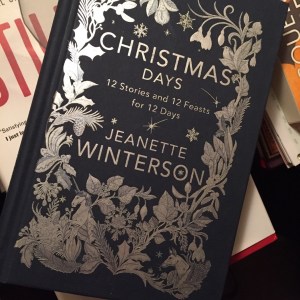 It’s the first day of winter! Hooray! I love winter. I LOVE winter in all of its quiet, cold, freezing, icy, white, profound, dark, cozy, blinding glory. Last year, I wrote a post on a different site about why winter is the most comforting, productive time of year for me, so I won’t rehash that. Instead, I’m going to have myself a ramble on the kind of books I love to read around Christmastime, which can pretty much be summed up by Jeanette Winterson’s new collection.
 I posted
  Madeleine James