A Merry Midwinter to You

It’s a holiday week, so I’m only doing one post. Enjoy and Merry Christmas.

A while ago… ages ago, really, I wrote an article entitled, “Yule: The Root of Your Christmas Tree”. This was so early in my career as a istock_000019538282mediumthinking person that it appeared in a newsletter that was printed on actual paper and distributed as a hard copy to people who held it, physically, in their hands. At the time, I thought the title was terribly clever and, while I now own that it might have been slightly less clever than I’d initial thought, the idea behind the title carries weight, perhaps even more now than it did then.

And now, the customary disclosure note, because, once again, I’m dancing right into one of the Big Three.

I was raised Catholic and am now a Buddhist atheist. I’ve never had religious faith, nor have I ever missed it, though I can very much see it’s value in other people’s lives.

Now, for all that, I LOVE Christmas, not as a celebration of one man’s birth, but as the current incarnation of a cultural phenomena that goes back millennia and feeds a very primal need in us, as human beings – to connect with each other during the darkest time of the year.

Before Christmas, there was Saturnalia, a Roman festival of light. Predating Saturnalia were a bevy of pagan festivals and feasts celebrating the winter solstice, among which Yule is the most well-known. The traditions associated with these various pre-Christian festivals colored the Christmas celebrations of early and medieval Christians. In fact, nearly all of the elements that signal Christmastime in the Western world, from fir trees and mistletoe to Santa Claus, have their origins in pagan celebrations from Britain, Rome, Germany and even Turkey.

Now, my point in all this is not to suggest that Christmas should not be celebrated as the acknowledgment of Jesus’s birth. I don’t particularly need you to keep the Christ out of Christmas, so long as you don’t mind if I do. My point, rather, is to suggest that human beings have been celebrating midwinter festivals since we figured out that fire is hot and keeps out the dark.

At it’s most basic, the purpose of these midwinter festivals was to unite the tribe / community so that its members could share in each other’s resources and good will. Far from being a frivolous thing, these celebrations were, in many ways, an effort at getting everyone through the long, dark winters alive.

The uncomfortable fact is that the early Church appropriated elements of many non-Christian midwinter celebrations and brought them all under the banner of a sanctioned Christmas holiday. There were many social, political, economic and even spiritual reasons for this, none of which I’m going to address in a post I’m trying to keep under 600 words as a gift to you, dear reader. However,  although Christmas is a decidedly Christian holiday now, it’s slow secularization makes me thing that those pagan, non-Christian origins have great value and are still applicable today.

Ancient pre-Christian principles still operate beneath our current Christian conception of Christmas, and I suspect that Jesus would approve of the message – community, sharing, light in the darkness, survival, love. Human love. I think that’s something we can all – Christian, atheist, Buddhist, Jew, Muslim, Hindu, pagan and everything else – get behind, particularly in this time of year.

So, in that spirit, I wish you all a very Merry Christmas, a marvelous Saturnalia and a peaceful Solstice. May we all be good to each other, protect each other, share our warmth and resources, and wish each other peace. May we all make it happy and whole to the New Year. Cheers.

Tank, or Gentleman Scholar

Image courtesy of http://en.wikipedia.org

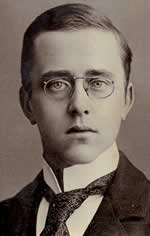
If there were ever a man like a mountain, Tank was not that man. Physically, he was more of a molehill, though his intellect towered over men three times his size.

Upon his birth, Tank had very nearly been named Theodore for his mother’s favorite brother. But Tank’s father, in a rare burst of filial interest had insisted that he should name his son, and that his son’s name should be Tank, not for any particular reason, except, perhaps, that he’d been drunk.

Despite the name’s dubious implications, it had gone on the birth certificate, and so Tank had been “Tank” for the entirety of his life, save, in quiet moments, when his mother had coo’d “Theo” in his ear. It was the distant memory of his mother’s voice that sallied him through years of quizzical looks and disappointment, (on his father’s part, at least), for the fact that his physical prowess failed to match either his name or his mental acumen.

How he would have loved to be Theodore – perhaps then he wouldn’t have been quite such a disappointment. Theodore’s did not lay bricks for a living, nor did they brawl or curse or spit. Theodore’s sipped brandy in book lined rooms and thought important thoughts, pausing, only briefly, to write the most important ones down. Theodore’s became scholars and architects, and left the brick laying to men named Tank… though not this particular Tank.

In awesome defiance of his father (and to his mother’s quiet pride), Tank excelled academically. His first very good school led to a second very good school, which in turn led to an impressive university career. It was at university that Tank discovered, and pursed, his love of etymology.

Tank’s calling found him one afternoon, as he was researching his own name. It was indeed true that the verb form of “tank” meant “drunk,” and had since 1893, but the noun form held a special light of hope. In the original Portuguese (brought west by way of India in 1616, from the Gujarati “tankh”), the word referred to an underground reservoir of water, and it was to this idea of hidden depths that Tank held firm.

His desire for Theodore slowly waned beneath the weight of his etymological studies and academic success. By the time he published his magnum opus, a thirteen volume tract called simply, Names, Tank was at ease with himself and his once dubious moniker, signing notes of thanks for various scholarly offers and congratulations, With Most Cordial Regards, Dr. Tank McGuinness.

On Women and Submission

I had originally intended to write on something entirely different today, but I just read a post that got me thinking, so I’m going to tread carefully into the territory of women and submission instead.

Four things up front:

Image courtesy of Marvel Entertainment

  1. For the purposes of this discussion, I’m addressing submission and domination that are consensual in nature. Situations in which there is no consent are entirely different, and merit their own discussions.
  2. Sexual submission and domination are only part of what I’m looking at. What I want to focus on is the impulse – socially, emotionally and sexually – to dominate or submit.
  3. There are dominant women as well as dominant men, just as there are submissive men and submissive women. Many people fall somewhere in between. Because I want to try to keep this from becoming a dissertation, I am looking at the prevalence of the desire (in women) to submit to powerful men, for the purposes of this discussion.
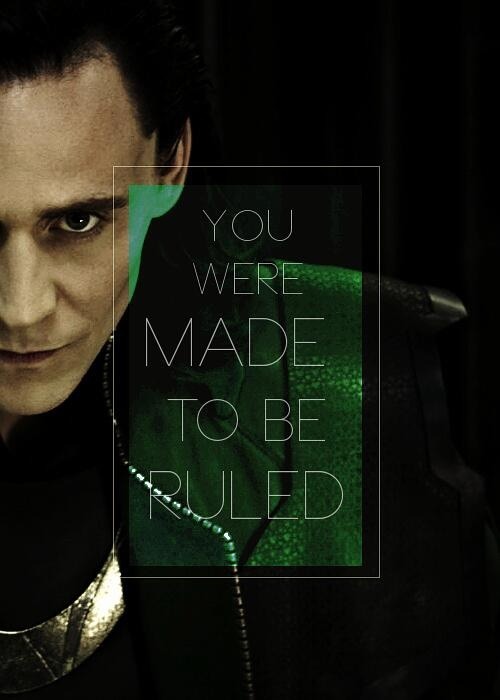
  4. A disclosure. I am not a submissive woman. It’s something of which I’m neither proud nor regretful. It’s just a fact of my personality. So, while many women look at this picture of Loki and get mildly to extremely turned on, I look at it and want to punch his lovely face. Nothing personal. I just won’t be ruled.

These points made, I respect the fact that submission appeals to many women. What’s more, I’m genuinely curious as to why this might be. What is it about submitting to male dominance that, against our own modern, feminist principles, appeals?

And that’s the tension, isn’t it? The 21st century woman is openly, and some might say, defiantly, empowered. We are shattering glass ceilings and railing against the “male gaze.” And yet, BDSM fairy tales, like 50 Shades of Gray that feature the explicit submission of empathetic women to complicated, dominant man, are ubiquitous, while Twilight’s Bella Swan, whose defining characteristic is, arguably, her submissiveness, has become something of a cultural icon, (though not unexamined).

Our culture has recreated women as powerful and empowered, and this is a very good thing. But biology is stronger than society, which is why it may be that, even as women enjoy a new found social dominance, so many are drawn, individually, to fairy tales of emotional and sexual submission, ie: 50 Shades.

Allow me to suggest, up front, that this is not a bad thing. Here’s why. I suspect that submissiveness is an evolutionary trait. I suspect that, through the millennia, submission has served a valuable function, which is why women are, generally speaking, quite aware of social hierarchies, even amongst other women, (I’m looking at you, mean girls). Dominance and submission are something a silent negotiation, a way of placing one person in charge so things get done, rather than having even more wars than we already do.

Following that thread, I’d like to suggest that submission has served women, evolutionarily speaking, particularly well, while dominance has served men. At it’s most basic, submission was (and in many places still is) a type of currency – “I will submit to this demonstrably powerful male and he will protect me and my young”.  We’re animals after all, and just as the males of most mammalian species vie for female attention through shows of aggression and dominance, most human women find dominant males to be undeniably attractive because that dominance signals the ability to procreate and protect. This would extend itself to being turned on, to varying degrees, by sexual domination and submission, quite naturally.

It’s something of a biological script, and those who follow it are, contrary to feminist theory and conservatives alike, simply following impulses that are evolutionarily hard-wired into the human brain. As a woman with a more dominant personality, even I can say that I see dominance in men as fitness marker. While I have no desire to be dominated, it does appeal on a very basic level, as a social indicator, if nothing else.

Biology moves slowly, much more slowly than culture. It may be that in several millennia, our wiring will catch up to our conscious minds, and questions of dominance and submission, and indeed, even of gender, will cease to be relevant. But they are relevant now. A tension exists in the social / sexual power dynamics of our culture. As a result, the relationship between women and submission remains an interesting, even pivotal, one – so much so that those of us who would punch Loki in the face, are, to some degree, aberrations.

All right, I’m looking down five discursive paths as we speak, so rather than get tangled up in an off the cuff ramble, I’ll end this post here. There’s too much to consider. Apologies for the lack of conclusion on this one, but I’ll be returning to this topic in future posts. In the meantime, I welcome comments, thoughts and input on this issue even more than usual.

On Food & Love

To say that we, as a society, are conflicted about food, is to understate the depth of our cultural neurosis regarding caloric consumption. We are a nation that openly fat-shames pregnant women while stuffing our faces with Oreos. And yet, our relationship to food wasn’t always so conflicted. For centuries, when lentils were daily fare and a lord’s feast was very much like a family dinner at Buca di Beppo, food was a glory in it’s basic goodness.

My grandmother was born in Spain and escaped during the Spanish Civil War. In the years leading up to Franco’s regime, she knew what it was to be hungry. Decades later, safe and successful in the United States, she still remembered the profound, human anxiety hunger produces, so when her grandchildren came along, she devoted herself to showing us that she loved us in the most critical way she knew. She fed us.

For my grandmother, food was love. If you loved someone, you fed them, because nothing is more basic than ensuring that someone you love has enough food to survive – it doesn’t matter if that survival is literal, as in “here are some berries to tide you over while you hunt that mammoth”, or figurative as in, “you get cranky mid-morning so have a cracker.” To her credit, my grandmother, though a complicated woman, never failed to make me feel loved, and she did so, in great part, through food.

In diametrical opposition to my very modern fears of getting fat, my grandmother felt that if you had so much food that gaining weight was a worry, then you were doing something right. It’s a viewpoint she shared with many people in her generation – a generation comprised of people who had survived World Wars, the Depression, drought, famine and civil unrest, depending on where they had come from. The nation, at that point, was united by the memory of a common experience – hunger, worry and need.

Today, in the wake of a recession that still, in many parts of the country, feels as if it’s going strong, when people have lost jobs and food stamp usage is high despite budget cuts, this type of hunger and worry are all too common. But it’s common on an individual level. There is a divide between the have and have-not’s in this country and that divide is partially responsible for our conflicted relationship, culturally speaking, with food. We are no longer united under the common experience of lean times, as our grandparents were. And so, while there are many (too many) people experiencing hunger on a daily basis in the States, as a country we’re still high on the hog.

So where are we left us as a culture when food is, generally speaking, abundant enough for us to waste, but healthy food the province of those who can afford it? I’m not entirely sure. Without a large-scale catastrophe uniting us in one common experience, our 21st century relationship to food remains complicated. We want to indulge and lose weight, and the stress of that dichotomy has imbued the topics of food and eating with a very different kind of stress than that our grandparents experienced.

The time may have come for us to change the terms by which we think of food. It is, after all, a necessity that crosses all ideologies and all biologies. While I appreciate my grandmother’s point of view, I cannot embrace the notion that food equates love. It is, however, a powerful way to communicate good will, affection, caring and kindness. It’s a way to build community and take care of others. Food is nourishment for our bodies, and a means by which to nourish our relationships, as well.

So, in this month of tortured indulgence, I propose this. That we do not indulge ourselves with despairing abandon, should we have the luxury of doing so, but rather that we share our food with each other freely; that we accept it with gratitude; that we enjoy it wholeheartedly; and that we eat it in a spirit of thankfulness, and yes, of love.

Let Me Know You: On Pseudonyms, Erotica and the Public / Private Divide

nude on bed

I write erotica under a pseudonym. Many authors writing in this genre do. It wasn’t until recently that I considered why that might be.

When I first started writing erotica, I took a pseudonym for two reasons. The first was down right frivolous – I thought it might be fun. The second, and far more practical reason, was that I freelance in a number of different markets and the pseudonym would allow me to keep the two halves of my writing career separate.

I suspect that, for the majority of authors, the use of a pseudonym is equally practical. Many writers have primary careers that would be negatively affected if the sexual nature of their writing were to become known. People expect their teachers, therapists, and doctors to be morally squeaky clean. Patients do not want their gynecologists to write erotica on the side. Erotica, though mainstreaming, is not yet above reproach.

In addition, the moral / ethical concerns mentioned above can, at times, extend themselves into an author’s private life, particularly when the writer’s parents, children or partner might be negatively affected. No teen-age boy wants his friends to know that his mom “writes porn,” and a father’s custody could be contested if his career as an eroticist were brought to light in court. As a result, it’s easier for many erotica writer to allow the nature of their work to remain selectively ambiguous. Ours is not a widely respected genre, after all.

There is a lot to say about the stigma associated with reading and writing erotica, a genre that is, for many, still negatively associated with historically pejorative terms like “porn”, “smut”, and “dirty story.” Despite the fact that these labels are being slowly reclaimed by those who read and write in the genre, the stigma still remains. There is quite a lot to say about why this might still be true, but I will resist the impulse to digress and, instead, focus on one, specific point, and that is how my pseudonym – the ubiquitous accessory of pornographers, eroticists and writers of dirty stories everywhere – has come to function for me.

Allow me to begin with what my pseudonym is not.

My pseudonym is not an apology for what I do. It is not a way to distance myself from what I write. I am proud of my work in this genre, and I am equally proud to be part of a community of writers that displays a level of causal curiosity that is admirable in an openly cynical age.

What my pseudonym is, is two different things. It is an invitation and a boundary; it is a welcome and a wall. It provides me with an identity that can be publicly shared, while remaining separate from my own. It gives me a persona to extend to my readers, while allowing me to both maintain, and transcend, the public / private divide.

Invitation. Wall.

Why, as a writer, would I need such a thing?

Because when you write about sex, particularly intentionally arousing, fictional sex, people react, often more viscerally than they would to content that is not quite so sexually explicit. My pseudonym invites the reader (or public) to engage and connect with my work, while allowing my non-public self a certain degree of anonymous privacy.

There is a long-standing assumption about writers. The assumption is that, however unlikely, an author’s work must be, in some way, autobiographical. In my experience, this assumption is heightened with eroticists. After all, our work is inherently sexual and very often kinky, edgy or taboo. We write sexual fantasies with the express purpose of arousing the people who read them. Because of this, the perceived intimacy of autobiography, when it arises, can be particularly intense.

For most readers, this perception of intimacy is not an issue. They read a story, they enjoy the story, they move on to the next story. There is, however, a small minority of readers who crave access to the writer beyond the limits of the page. They want the personal connection they made with a story to extend to the author who wrote it.

Some time ago, a reader contacted me in a manner that can only be described as overly attached and profoundly curious. This reader had connected, romantically and sexually, to a story that I had written and published under my pseudonym. He confessed that he wished to gain deeper, truer access to the woman who had written it; he wanted to share my mind and, somewhat chillingly, my “soul”. This reader, caught in the illusion of sexual intimacy that the story had created, wanted exclusive access, not to what I had written, but to me.

What’s more, this gentleman had constructed around my work and pseudonym, a persona that he desperately wanted to believe in – that of the sophisticated vixen and dominant mistress who would grant privileged access only to him. It was a fantasy that he’d spun with no input or encouragement from me, save for the story that I’d written and that he, in turn, had read. This is when my pseudonym became more than a pithy solution to a professional problem. This is when it became a wall. It gave this man something to attach to, without attaching dangerously to me. It gave me the space I needed to diplomatically end his fascination. And so, we were both able to moved on.

Interestingly, this has never happened with any of the essays, articles and reviews that I’ve written under my own name. Nonfiction has never elicited this kind of intensely personal response, though there is far more of me on display in that work than in the fantasies I spin.

Why is this? What is it about erotica and erotic fiction that has the power to inspire such an emotional, sexual and even psychological attachment? Why the need to possess?

I believe it comes down to connection. People crave connection. We want the exclusivity of understanding. We desperately need to be understood. It’s shockingly erotic to be understood, (to paraphrase Mary Rakow). So, when a story resonates with a reader, that resonance can, at times, go beyond the page to creates the illusion of kinship, sympathy and intimate understanding; and that illusion can be a very intense, indeed.

The strength, as well as the challenge, of public / private divide as regards writers and readers, is that the reader gets access only to what the writer allows. Only the writer herself knows the degree to which her mind, soul, psyche or heart appears in her work, and she is under no obligation to say. Because of this, the publication of a piece can be seen as a sort of offering. It is an author’s consent to grant public access to whatever appears, both explicitly and implicitly, in her text. This does not, however, equate to full, private access to her.

When someone reads my work, I want the focus to be on the work, not on whether I am, personally, gay, straight, bi, kinky, vanilla, submissive or dominant. I don’t want my life and predilections to muddy the ink on the page. That ink represents the access that I grant. My pseudonym, and the persona it names, invites the reader to enjoy my work without the distraction of injecting me into it. Just as importantly, it gives the reader a safe avatar to attach to, if only until they move on to the next story.

Authors want desperately to connect with readers. We want our work to be enjoyed and understood. For me, the public / private divide allows me the security and the freedom to pour words, uninhibited, onto the page and strive to make that connection. It frees me up to engage and explore and write with far more abandon, and honesty than I otherwise might. My pseudonym allows me to walk the delicate line between my private and public selves. I could never have predicted the depth of my relationship to my pseudonym, my lark of a second-name, but I am profoundly grateful for it now.

Please Don’t Let Me Be Misunderstood: On Writers & Intent

I have always feared misinterpretation. Whether the gap between my intended meaning and the received meaning is the result of poor communication on my part, or poor comprehension on the part of the reader is, for me, secondary to the fact of the gap exists at all. As a writer, I have a dedicated responsibility to clarity of thought and expression. If I cannot come as close as possible to accurately saying what I want to say, then I’m failing to do my job. This is fine to a point. But what about situations wherein the topic is so charged that no amount of care and clarity can prevent the message from disintegrating in the reception?

Recently, the media has been covering the rise of what is being called “rape culture” on high school and college campuses – that is, the prevalence of young women drinking to incapacitation and young men engaging in (often) nonconsensual sex acts with them. Steubenville, Marysville and other similar cases have opened up the discussion of how rape is treated by everyone from a Montana judge to frat bros.

In the middle of this, Emily Yoffe, a writer at Slate, published an article suggesting that young women take steps to protect themselves by not drinking to excess at parties. Her tone was measured and her message fairly clear. But while the story was met with support by some, the majority of responses were vitriolic in their mis/interpretation. In the face of varied and vocal criticism, Yoffe then wrote a follow-up article, attempting clarify her message and acknowledge the situation while not backing down. Again, her tone was measured, but it was too late – her message had already been mis/interpreted and appropriated. No amount of follow-on could retrieve her original intent.

The merits and / or flaws in Yoffe’s position aren’t what interest me here. What interests me is that Yoffe’s attempts to control her message didn’t work. Not at all. And so, what I’m curious about is this: at what point does a writer’s ability to control her message end?

The answer, I suspect, is one I don’t particularly like. I suspect that it ends the moment the article, opinion, editorial, post, story, text, tweet or email gets read. After that, a writer can attempt to do damage control, but if a message is derailed, it’s nearly impossibly to get it back on the tracks, (as evidenced by Yoffe).

The bottom line is that readers are free to respond to a writer’s work in any way they like, through the lens of any experience, bias or ideology. The reader has the power to misinterpret, appropriate or spin anything you say. It’s like a game of telephone. So then, what’s the point? If words are essentially a Rorschach test, why do we bother stringing them together to communicate at all?

The answer to that question. and the value of the effort, is in the attempt at communication. The thing to do, whether you’re writing an email or a tweet, is craft your thoughts as consciously as you can. Be clear. Be concise. Write with the reader in mind. Compel, argue, debate and cajole. And then let it go. It’s ok. If people read your words, and misunderstand, it may be a personal frustration for you, but culturally speaking, those words will still have had an impact and prompted discussion. They will have stirred emotions and triggered thoughts.

It’s the discussion that leads to progress, as incremental as progress is. Ultimately, you cannot control your message any more than you can control how people think, but you can communicate clearly and well, and hopefully then, your thoughts will be heard, and prompt discussions of their own.

Bluebeard’s Clever Wife

For a bit of levity at the end of the week, I’m posting a little story I wrote. It’s a fairy tale and it’s a bon bon, but it’s tiny – tiny enough to swallow whole. I hope you enjoy…

Bluebeard’s Clever Wife

Once upon a time, a girl married a man. He had a shady reputation, but she thought he was kind of cute. Plus, he was rich – not that she noticed, of course. So they married, and went to live in his castle, which was very nice and extremely isolated because he liked his alone time.

One day, shortly after they married, he told her that he had to leave on business. He gave her the keys to every lock in the house and told her she could open them all, except for one.

“Don’t, under any circumstances, open that door,” he said, pointing to a black oak door with a large iron lock. “If you do, I’ll have to kill you. Fair warning.”

Then he left.

Always a dutiful soul, she waited until the door closed behind him to go to the forbidden room. What she found shocked her. Bits and pieces of his former wives were scattered about like puzzle pieces. Hands, torsos, heads… the place was a wreck. Unable to stand the mess, she went to work reassembling the ladies, until they were all lined up, neat as pins.

She was just congratulating herself on a job well done when her husband came back home. Apparently, it had all be nothing but a test. When he discovered her in his secret room, he was understandably upset, but she impressed upon him importance of keeping things tidy. Then she showed him her improvements, which included a clever little bucket for miscellanious parts.

Bluebeard was so struck by her logic, and by the convenience of having everything close to hand, that he quickly forgave her with a hearty laugh. From that day forward, he left the door unlocked, while she, inspired by her husband’s hobby, took up the study of anatomy. They lived happily ever after.

On Over-Education, or The Economics of Thought

Education in the U.S. is a political topic, I want to focus on the individual’s relationship to education – specifically higher education and the pursuit of advanced degrees – and because I’m the individual that I know best, I’m going to look at this through a fairly personal lens.

As a caveat, I just want to state that I realize that I’m coming at this from a financially privileged place.

I have two advanced degrees, neither of which has led to my chosen career. Master’s degrees are costly, and mine are no different. The price is paid in time and effort, in the wobbling balance between work and life, and in so much money

I chose to pay these costs, not once but twice, and I take responsibility for those choices. But given the costs that I chose to pay, I would have expected the lack of concrete returns to distress me. And there are days when it does – deeply.

It would have been nice to see a career rise directly out of the educational foundation I laid. After all, the age of the gentleman scholar is over, and though I am no gentleman, I have scholarly predilections and a fair amount of training in that regard, which is why I can’t fully commit to bitterness at the lack of tangible returns. Although I’m distressed by the broken promise, economically speaking, of higher education, I did not come away from these degrees empty handed. Far from it.

In exchange for my time and money, I acquired the ability to analyze and critique, to research, to write critically, to communicate clearly, to document and to argue a point. I strengthened my natural tendency to wonder and find out. In short, I learned to think for myself, because while I was deciding that Derrida was a fraud and post-modernism a house of cards, while I was learning that cataloguing and classification have become ironically complicated, given their original purpose was to simplify the storage of knowledge, I was exercising the muscle of analytical dispassion. There is an intense amount of value in that, though the cost is high.

Would I have chosen to undertake two advanced degrees had I known that the gains would be of the intangible, personal sort? No. I would not. But I’m grateful that I did. My degrees haven’t yielded conventional goods, but they have brought me to a better, more thoughtful self. It’s a luxury I didn’t intend, but one I’m lucky to have had.

What Are We Saying When We Talk About Sex, Religion and Politics?

In honor of the holidays, I’d like to take a look at the three topics of conversation that everyone knows to avoid at social gatherings.

Sex. Religion. Politics.

To put it mildly, this triumvirate  can be divisive, which is why they’re famously avoided in favor of awkward small talk and coversations that no one wants to have. Sex, religion and politics are naturally controversial – unless all of the conversationalists agree. If the majority of people in the room hold them same beliefs, then these issues become a way to bond and confirm one’s acceptance in the ideological fold. The ideology itself is secondary to re-affirming a sense of belonging; or, to put it another way, it is the conduit through which this re-affirmation is performed. This is a pretty universal phenomena – doesn’t matter if the ideology is Christian nationalism, atheism, queerness or Catholic Pro-Choice Buddhist Libertarianism…. The downside to this bonding experience is the formation media silos that get consistently and thoughtlessly. People with differing beliefs are “othered” more and more.

There’s a contrarian impulse to  bring up trans-athletes when we know that Aunt Janice is a TERF? Why talk about what a goon Nick Fuentes is in from of Uncle Ed, who thinks that “Hitler took a good idea too far”? Is it just an impulse to troll?  Or is there something deeper functioning?

I suspect that it comes down to a couple of things. The first is biology – it literally feels good to throw down ideological grounds. Righteousness = dopamine. The second is evolutionary and a little more complicated. Riling up your vegan cousin or your MAGA neighbor is a little bit like defending your thought village from hostile invaders.

This is not to say that ideologies are bad. I’m full of ideologies, as are most human beings. To believe in things is incredibly human, so I will not fault humans for having beliefs. The trouble isn’t in ideologies, but in the bubbles around them, ie: our inability to see past our own to consider the views of others.

When sex, religion or politics are brought up in the context of extended families, roasted meats and lots of alcohol, the impulse might be ideological, either as an assertion of our own ideology, and the deep-rooted need to have that identity ratified by non-believers. Or, to put it more simply, to change Aunt Janice’s goddamned mind. This is clearly not going to happen because she feels the same way about you. But we have the impulse to try.

This impulse is important, because it’s an impulse to engage. While ideological clashes can, and often do, lead to uncomfortable interactions, they also open the door to possible engagement if the participants are willing to approach each other flexibly.

Sex, politics and religion are divisive issues. Discussing them is not always useful or healthy, but their divisiveness also contains an impulse to engage. That is where their potential lies, but their value lies in going one step farther, past simple engagement, to a place of thinking and of discourse as we challenge and are challenged. This feels impossible right now, but I’m hopeful.