Vital Parts

Image courtesy of http://lareviewofbooks.org

Image courtesy of http://lareviewofbooks.org

We just finished watching Season 3 of Game of Thrones last week-end – because we don’t have HBO, we always end up binge-watching it on disk when it’s finally released. I have to be honest though. Binge-watching wasn’t the easiest way to experience this time around. The show keeps upping the ante (which is great), and so this season was fairly relentless as far as bad things happening to EVERYONE goes. Just to give you some perspective, this is coming from the woman whose brain went, “aw, bummer”, and kept eating popcorn when Ned Stark lost his head.

So, for those who have yet to see Season 3:  This post is spoiler-dependant, so if you don’t know what happens, and don’t want to know what happens, (all five of you), be warned. And for those of you who haven’t been sucked into the cultural phenomena that is GoT (possibly a saner life choice), I’m going to give a quick run down of the two plot points I’m going to talk about. They are:

1: Jaimie Lannister’s Be-Handing

2: Theon Greyjoy’s castration and torture
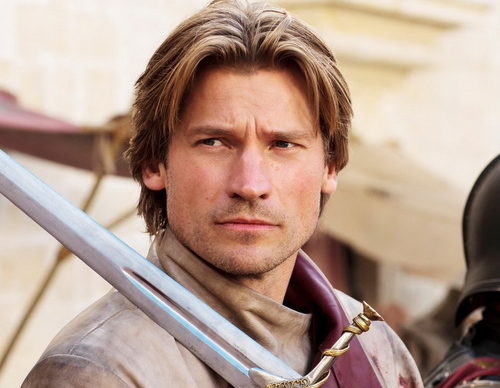
jaime-lannister

Jamie the Kingslayer

Fun times, right? Ok. So for those who don’t know this already, Jaimie Lannister is widely considered to be the deadliest man in the Seven Kingdoms with a sword. He’s a preternaturally good fighter, so much so, that that is, up to this point, who he is – the Kingslayer.  There’s a lot one can say about him, but for the purposes of this post, that’s enough.

Theon Greyjoy, on the other hand, is the weak, insecure, son of

FYI: That's Theon's sister

FYI: That’s Theon’s sister

the Lord of the Iron Islands, a hard-assed enclave of seafaring bad-asses. He clings to this identity because he is hostaged out to a rival family as a boy. By the time he reaches adulthood, he has identity issues, an over-inflated sense of his nobility, and an over-fondness for prostitutes (and pretty much any other woman willing to let him at her).

Now, going back to bad things happening, (because bad things happen to everyone on this show. It’s endemic). So far, since the show began, the apparent protagonist has been imprisoned and be-headed, (Ned Stark, Season 1); an exiled princess has been sold into marriage to a barbarian by her insane, creepy brother; the King of Westeros has been murdered by his wife so that he won’t find out that his children were actually fathered by her twin brother, (love those Lannisters); various women are raped, almost raped, and often killed; babies and children are murdered; and, of course, there’s the Red Wedding, wherein a good chunk of the protagonists are slaughtered at a feast. I could go on.  So what makes what happens to Jaimie and Theon different?

In most of the cases I listed above, the characters are either killed outright, or left intact enough to move on from whatever violin befell them. This is not the case with Jaimie and Theon, because Jaimie and Theon are stripped of their vital parts.

Jamie Lannister, Post Be-Handing

Jamie Lannister, Post Be-Handing

When Jaimie’s sword hand is cut off, he loses not only the hand, but his ability to be the man he had been. In short, he loses his identity. Suddenly, the deadliest man in seven kingdom cannot defend himself against a rag-tag group of course soldiers. He is vulnerable in a way that is unnatural to him, which makes his attempts to fight left-handed so difficult to watch. It’s not the hand that disturbs so much as the dismantling of his identity. Luckily, for Jaimie, this dismantling leads to an interesting evolution as a character and he becomes, arguably, a more complex and nuanced man as a result.

Theon Greyjoy is not so lucky. Through a series of Terrible Decisions ™, Theon finds himself in the custody of a sadist, being punished for betraying the man he swore loyalty to as king. Over the course of days, Theon endures psychological and physical torture that softens his already fairly weak mind, until the day comes when he is fully castrated, and his severed parts are sent to his father in a box. Shortly thereafter, he accepts a new name from his captor. He ceases to be Lord Theon Greyjoy, heir to the Iron Islands, and becomes Reek, a “pile of meat”.

The significance of Theon’s castration has been well-covered. This piece in the LA Review of Books is especially interesting, so I won’t stray too  far down that road. That said, there is a point I want to make.

Theon_SexWhile Jaimie’s identity is challenged, it remains, fundamentally, in tact. He is still Jaimie Lannister and his reputation, pre-maiming, is strong enough that it helps see him through afterwards. Theon, however, does not and cannot recover from the loss of his sex organs for two reasons. The first is fairly general. When he is castrated, Theon loses the thing that identifies him as a man – a great loss to any male, but one especially difficult for Theon, who relies on sex to assert his wobbly sense of power and prowess. The second is that, when he  loses his reproductive organs, he ceases to be his father’s true heir, because he can no longer sire children. In fact, his father abjures him on those grounds after receiving the box that contains those organs. So, the loss of a penis is, for Theon, not just the loss of important bit of anatomy, it’s literally the loss of his manhood, of his personal identity, and of his legacy and identity as a Greyjoy, as his father’s son.

Unlike another character, Varys, who becomes a powerful spymaster as a result of castration as a boy, Theon’s identity was established enough at the moment of the loss, that the severing unravels him. He really does cease to be Theon Greyjoy in that moment, and becomes something entirely else. Something far less.

In the end, for both Jaimie and Theon, it’s the loss of these vital parts that disturbs. Beheadings and slaughters, no matter how violent, end in death. There’s a finality there. It’s not personal. There is no specifically ironic justice to be endured. For Theon and Jaimie, their losses are intensely personal to the point of irony, (in a truly Dante’s Inferno sort of way), and they are made to live on after.

It’s interesting, and heart-breaking, and it makes me think about what are, for me, my own vital parts, and what I would do if they were suddenly and violently taken away. I don’t know. I can’t imagine. And I’m grateful to live in a world where it is very like that I won’t have to find out.. that said. if anything is to be gotten from GoT, it’s that no one is really quite safe. Bad things can happen to anyone.

Blind Spots

Blind Spot. Image courtesy of pegasusnews.com

Blind Spot. Image courtesy of pegasusnews.com

Last week-end I had lunch with a friend and, as always, the conversation was great, ranging over everything from books and education to politics and religion. It was a fabulous time, full of recreational thinking and awesome insights, including one that I hadn’t known to expect: My blind spots are back.

I’ve got cultural blind spots so big that I often get lost in them  before I even know I’m off the map.

This isn’t a new realization. I get it every so often, usually when I stop thinking on autopilot and encounter something contextually unexpected. In this case, it was a Coke ad, or rather, the response to a Coke ad.

During the Superbowl, Coca-Cola ran an ad featuring Americans from different cultural backgrounds doing normal people things, like dancing and swimming and laughing, while the song, “America the Beautiful” played in the background. It was nicely done and inclusive. Honestly, I barely thought about it. But a lot of people did and here’s why:

“America the Beautiful” was sung in multiple languages. Apparently, this wasn’t ok, because the response on Twitter was, shall we say, vitriolic. You can see both the ad and a selection of vitriolic tweets over at Public Shaming, (a site that does, I must admit, have a left-leaning slant).

So, all of this goes down and I’m mostly unaware. I’d seen the ad but, like I said, I didn’t really think about it, mostly because I don’t drink soda. So when my friend referenced the openly racist nature of the Twitter response, it took me a second to process it, because it honestly didn’t make sense. I mean, what kind of problem could people have? Right? It’s Coke. Whatever.

See? Blind Spot.

Here’s the thing. I live in California. I grew up in San Francisco  and, for the most part, the only other places I’ve lived were New York City and West Hollywood. In short, I have always occupied a socially liberal bubble. (There was a brief, nine month stint outside of Dallas but, in that time, the bubble ceased to exist, which was interesting. It re-inflated after I moved back to California).

Without imposing a value-judgement one way or the other, let’s just say that I’m not often forced to process differing cultural views. Sure, I went to Catholic high school, but it was in 1990’s San Francisco, so all five teen pregnancies were accommodated without judgement or fuss (right down to special desks) and not one, but two gay male couples went to prom (without getting killed with sticks) in the four years that I was there. Homosexuality, multiculturalism and sex where just part of my landscape and, to a great degree, they remain so.

Which is why when I encounter a response like the one on Twitter, I get thrown off. Because, due to social self-selection (i.e.: having friends with similar cultural beliefs) and geographic location, I’m essentially insulated from opposing beliefs, which is why the media – both social and otherwise – is so valuable.

The Internet is essentially my safety net. Through regular news scrapes and general browsing, it ensures that I’m exposed to the world beyond my ideological nose. I just can’t get lazy – it doesn’t work if I only read my favorites (sorry Slate, Salon and Nerve). My surprise during lunch with my friend was a wake-up call, one that I periodically need, because, for all my talk about discourse, I’ve been getting mentally lazy and complacent. Apparently, to paraphrase Doc Holliday, my hypocrisy knows no bounds.

So, more than anything, this post is a reminder for me to get off my mental ass and see what’s going on beyond my comfort zone. Because blind spots are scary. They’re a weakness. Blind spots are where things hide. As someone who hates surprises, I need to reclaim a bit of that territory before something unexpected bites me on the ass. Figuratively speaking, of course. I’d prefer to be the mountain lion, and not the deer.

Moderation and the Art of Earthly Pleasure

Epicurus, c.300 BC

Epicurus, c.300 BC

A warning right up front, this post is going to be pretty loose and off the cuff, so please forgive any glaring generalities. I’ll try to keep them at a minimum.

Last night, I caught part of the PBS program American Experience. It’s an interesting show and while I don’t often watch it, it always contains some food for thought. This episode, The Amish: Shunned, was no exception.

To be frank, there are many points on which I disagree with the Amish religion. I’m afraid that I just can’t view a community that so deliberately rejects progress, education and individual thought as terribly sympathetic. That said, it’s a valid culture based on a valid, if shockingly medieval, set of beliefs and I’m not going to waste time nit-picking it to pieces simply because I disagree. What I am going to do is examine one tiny corner of those beliefs – the avoidance of pleasure – because this principle has ramifications beyond the Amish community.

One of the Amish church members interviewed for the program brought up the issue in terms that implied the inherent logic of pleasure avoidance. He said, (and I’m paraphrasing now), “it’s human nature to avoid pain and pursue pleasure, as if that’s going to lead to happiness. Well, news flash, it’s not.”

Now, on the surface, I can see how this would be an easy notion to buy into, particularly from a conservatively religious points of view. If our nature is telling us to pursue pleasure, and our nature is essentially animal (i.e.: sinful), the only way to heaven must be to transcend our animal nature and pursue spiritual purity (per whatever terms your religion defines). Now, disregarding the ironic hypocrisy that this has historically led to (witch trials and murder aside, the attitude very often leads the abstainer to become addicted to the very pleasurable emotion of social righteousness), there is another, different angle from which to view the issue.

I’d like to propose an more Epicurean take on the question of earthly pleasure. The Greek philosopher, Epicurus, believed that what he called “pleasure” is the greatest good. Now, this is where it gets interesting. He also believed that the way to attain such pleasure is to “live modestly and to gain knowledge of the workings of the world and the limits of one’s desires”. In other words, moderation leads to pleasure, which in and of itself, is a form of transcendence.

I’m not going to say that this point of view is more valid than the strict path proposed by the Amish or any other conservative religious group. I would say, however, that the Epicurean approach is equally valid and potentially more healthy. Know what you like, know what you don’t and find your limits – know where you overindulge and gently lead yourself back. No judgment. No drama. The maintenance of moderation requires awareness, which leads to presence in the moment, which can lead quite directly to lovely moments of clarity – every day transcendence. And yes, even spiritual and earthly happiness.

Pleasures aren’t inherently dangerous. Pleasure are simply pleasures. It is up to the individual to moderate the degree to which he or she partakes. To ignore pleasure is to reject one of our species’ greatest gifts – joy. Joy in food, joy in sex, joy in clean fresh air and warm fires at night. These are all valid pleasure and part of the equally valid human experience. Surely, if there is a god (as an atheist I don’t believe there is, but I respect those who do), that force would want us to enjoy the full spectrum of our lives, rather than reject half of the gifts we were given.

Barnard on Feminism in the 21st Century

Recently, a representative of Barnard College reached out to me with the details of a new initiative that explores what it is to be a feminist in the 21st century. How do young women engage the notion of feminism in art, ideas and activism now? In an effort to explore this question and many others, Barnard College is beginning a new podcast called, Dare to Say the F-Word. In it, issues from identity and perfectionism to why many young women today hesitate to identify as “feminist” will be explored.

At a time when there is so much contention over what the word “feminist” even means, I think this sort of initiative is incredibly valuable, if only as a means to explore, and possibly even attempt to redefine, the word for a new generation.

Rather than go on at length, however, I’m going to provide a link to post written by Barnard President Debora Spar, author of Wonder Women: Sex, Power & the Quest for Perfection. In it, she explains that while many women today struggle with the idea of perfection, they also struggle with the concept of feminism itself, which is one of the many issues that will be addressed in Barnard’s new podcast, Dare to Say the F-Word, which I mentioned above. Here’s the link:

Read President Spar’s thoughts in this exclusive post.

While I have my own thoughts on what feminism is and how it functions (or fails) to now, I am personally, very heartened by any effort to explore an ideological issue from a discourse-driven point of view, and it seems to me that Barnard is attempting to engage feminism from just such a place. As a result, I applaud their efforts and very much look forward to seeing what comes of it.


On the Nature of Fear

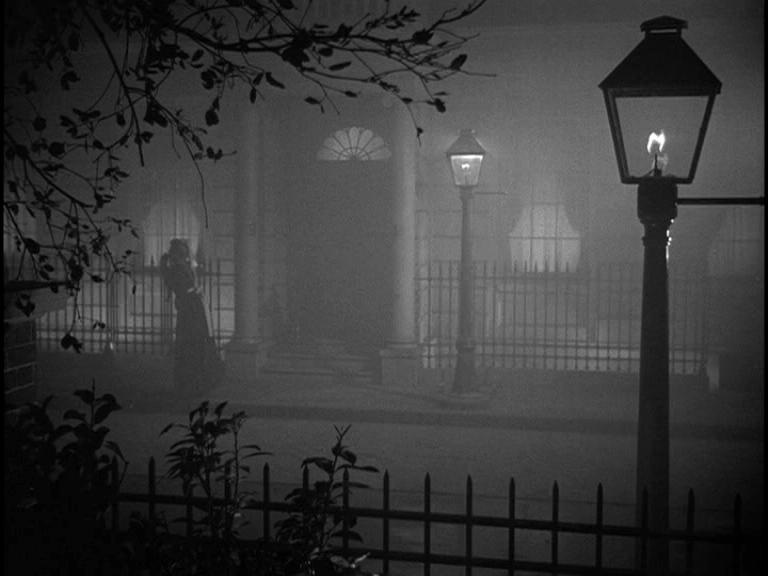
Image from the film, Gaslight (1944).

Image from the film, Gaslight (1944).

Several weeks ago, my daughter had night terror. They are aptly name. She was terrified and it was terrifying to watch. She screamed so hard she couldn’t cry and fought, trying to defend herself. After 5-7 minutes, she calmed down and slipped right back into sleep.

That night, I stayed awake, watching her and thinking. The next morning, she didn’t remember a thing. She went off about her day, happy as a bug. I, on the other hand, was pretty raw. Once I was able to step back, however, her display of what I can only call primal fear, and the empathic recognition I felt, struck me as interesting and made me think.

What is the nature of fear? I don’t mean what purpose does it serve. I mean what is it? At it’s most basic, fear is a response – a response to a perceived threat. It prompts our brains to produce chemicals that induce either flight or fight. This response is innate – people run at the feared object or they run away. Most people lean more heavily towards one or the other. Others have equal access to both. I’m a natural fighter. And that night, as my daughter pummeled away despite stress and obvious fear, she showed me that she is too.

In a film last year called After Earth, Will Smith portrayed a type of warrior who is, literally, without fear. This absence of fear renders him invisible to a species that marks its prey phenomenally. Fear smells good to them. To transcend fear, to somehow rise above and conquer an amygdala level response, is portrayed in the film as the ideal. In fact, the film’s climax centers around the young protagonist’s ability to do just that – eradicate his fear response and defeat the “monster” that was stalking him.  In the film, this ability signals both he attainment of an ideal, and the next level of development for human beings.

It’s a compelling message on the surface. Transcend your fear to the point of eradicating the response. Who wouldn’t want that? Upon consideration, however, I would say that, seductive though it is, it’s a bit of a misleading message.

In reality, fear serves two purposes. The first is obvious – that initial response – flight or fight – that might keep you from getting killed.

The second purpose, though less obvious, is arguably just as important. Fear keeps us civilized. Fear makes us aware of consequences. As in, Don’t jump off that building. You could break your neck, or Don’t rob that bank. You could end up in jail.

Granted, fear also adds an element of risk to those activities and others like them. Therefore, fear could be said to heighten the thrill of doing these things. But for most of us, on some level, fear is the filter that keeps us from being psychopaths. Fear reins us in.

In the end, After Earth implies that fear is a useless emotion – one that a person must transcend. I would argue that fear is neither salutary nor unsalutory. It’s a matter-of-fact response. It’s value correlates to the value of swallowing or blinking. It happens because that’s how our physiology evolved.

Simply put, you cannot choose not to fear. To suggest doing so is to suggest the physically improbable. What you can do, is manage the impulse. You can train yourself to acknowledge fear without attachment, as many Buddhists do. You can teach yourself to channel the adrenaline fear produces into defense. You can learn to dismiss, or channel, or transcend the response once you’ve had it. You can do many things with instinctive fear, but you cannot eradicate it. Realistically speaking, it’s part of our make-up. We might as well not breathe.

My daughter fought, even though she was terrified, even though she obviously didn’t know what was happening and that she wasn’t alone. She fought, and she fought hard. Fear told her to fight. Fear told her to survive. That’s the purpose of fear.

Evolutionarily speaking, fear has kept up from poking bears with sticks, and from eating the berries that killed Old Man Grog. Fear has kept us viable, even though predators with teeth and claws should have destroyed our tender, pink selves. Running. Fighting. That is what fear helps us do.

If the time comes to eradicate the fear response then we will – slowly, over millennia. In the meantime,  it might be more useful to understand fear, and how it functions. Better to accept and  live  comfortably with it, rather than wish, fruitlessly, that it didn’t exist.

A Question: On Women and Homoeroticism

This is really more of a question than a proper post, but I’ve had an idea for an article and I want to solicit some opinions before I write it.

A friend posted a video of two men kissing the other day and the response from women was, shall we say, heated… as in, every single woman who responded thought it was hot. Granted, there was some selection bias, but it was enough to get me thinking. So I did some shallow digging and uncovered a comparatively large cache of media, mostly written, though there’s plenty of visual too, (cheeky little gifs), that cater to women who love watching homoerotic situations and / or gay sex. The fact that M/M erotica and porn do very well with the female demographic, (and not just in the gay community), tells me there’s something there. What I’d love to do is figure out what that something might be.

From a personal angle, I can absolutely see the appeal of watching / reading about two men, (just as many men find the idea of two women to be a fine thing) but I’d like to go beyond “yeah, that’s hot” to figure out why. So, I’m soliciting opinions and thoughts on the subject.

A few guidelines first though:

1. If the thought of two men engaging in sexual contact isn’t your thing, that’s absolutely fine. I know that there are plenty of men and women who would prefer to take a pass. That said, please don’t blast the notion in your comments, because the reality is that there are many people who would take seconds on that dish. Please respect the fact that it’s a personal preference and do not treat the question as an attack on your own predilections.

2. As I mentioned above, I’m keeping the inquiry pretty restricted to women viewing / reading about two (or more) men. If, however, there’s an angle that involves the converse appeal for many men in watching two women, please feel free to mention it.

3. Be respectful. This question involves sex, homoeroticism and certain aspects of voyeurism. As such, some folks may find it uncomfortable. Again, that’s ok. Just be sensitive to the tastes of others. In short, see #1.

Thanks! I appreciate the time anyone takes to weigh in!

Edited 1/28/14: I would just like to thank everyone who has taken the time to weigh in on this subject. I’m leaving the comments open, so if anyone has anything to add, please feel free!

Agnes, The Maid

This is a short portrait / character sketch. Sometimes it happens that I get a character without a story. Usually it’s a character I quite like and will come back to later, either in their own piece, or as a tertiary character somewhere else. Agnes is one of these characters…

Agnes, The Maid

No one used a feather duster like Agnes. The command with which she wielded a batch of feathers shoved into a stick was truly terrifying. Even the mistress stayed

out of her way, not daring to test the sideboard after Agnes had been through.

Agnes was a narrow sort of woman, rather like an obelisk, with an air of authority that made her seem far taller than she actually was. Even as a child in the first blushes of youth, there had been little of the girl and even less of the blush about her. She was made of serious stuff. Lest you forget, the line of her mouth would remind you, before her shoulders squared off like a coat rack, and she took up arms against the dust.

Serious as she’d been as a girl, Agnes had had hopes – hopes that had been dashed quite early on in her career as a person. As a girl she had wanted to join the cavalry and go to war like her father, who’d been a sergeant in the Boer Wars. When her father had informed her that daughters did not join the cavalry, that this honor was only for sons, and that even if they did join the cavalry, his daughter would certainly not, Agnes had cried for hours. It was the last time in her life she would cry.

Finally, touched by his daughter’s rare show of emotion, Agnes’s father relented upon one nonnegotiable condition. If she were determined to go join the army, it would be the infantry for her. No “prancing about on ponies” – not for his girl. She would charge into war like a man. Though she was by no means un-heroic, the “ponies” had rather been the point. But her father would not be moved. She joined domestic service instead. Agnes never forgot her dream though. It was her one great disappointment. It would affect her, subtly, for years.

Despite her lowly role as maid, she wore her uniform with military precision. The sheer force of her personality endowed her ruffled cap with an air of authority, as if the cap knew itself to be overly frilly, and had tried to sharpen up. She took orders and conveyed orders with the bearing of a much older person. And, of course, the house had never been so utterly free of dust.

Agnes rose efficiently through the ranks to head housemaid after only two years, and it was assumed that when the housekeeper retired, Agnes would take up the helm. With the confidence of authority, Agnes felt this to be true. She was, after all, a nearly perfect servant. Her only flaw was the aggression with which she dusted the house. It called to mind a general, spitting on enemy armies before crushing them in his, (or her), wake.

Old Spice Makes It Clear How They Really Feel

I will rarely Reblog or link directly to someone else’s post without adding some thoughts of my own, but this post at Velociriot was too good not to share.

Apparently Old Spice has a new ad out, one that borrows a touch too heavily from Oedipus Rex. It also puts into questionable song an uncomfortably casual disrespect for mothers, girlfriends and women in general, as well as the young men that they love. But don’t take my word for it – head over there and take a look at the original post. It’s a good read and the analysis is sound. Nicely done to folks at Velociriot! (But not you, Old Spice. You dropped the ball on this one).

On Monogamy

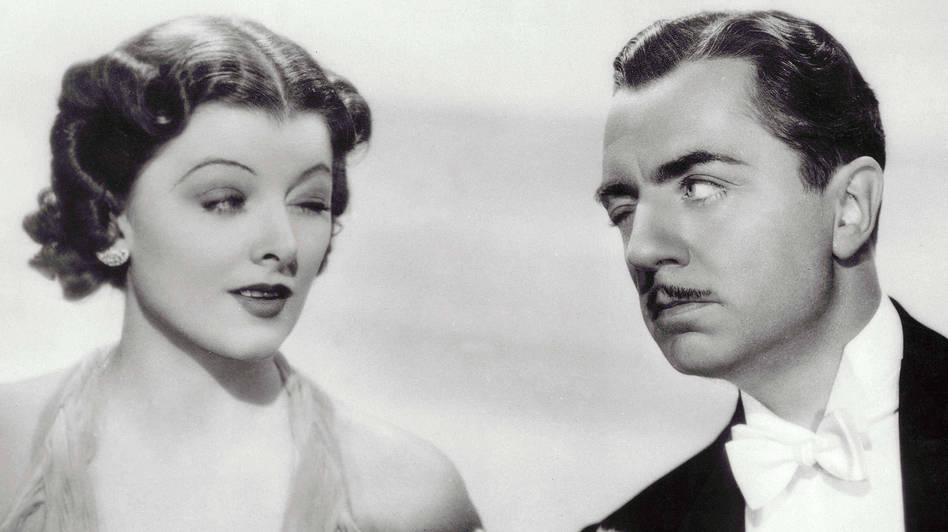
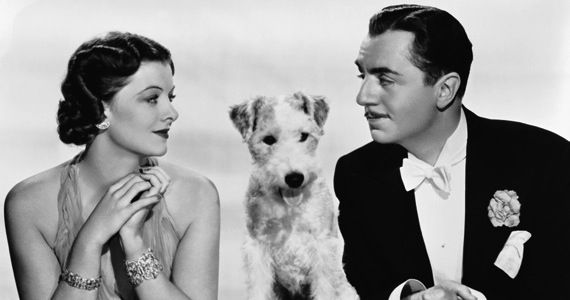
William Powell and Myrna Loy as Nick and Nora Charles in The Thin Man, by Dashiell Hammett

William Powell and Myrna Loy as Nick and Nora Charles in The Thin Man, by Dashiell Hammett

This is a picture of Nick and Nora Charles, a fictional couple who, for me, defines the ultimate in healthy, committed relationships. I realize that, because they are not real, this statement could easily be questioned – after all, it’s not hard to make an ideal out of people who aren’t real. However, the fact that the fictional relationship of a fictional couple popularized in the 1930’s, (a period of time in our culture when the boundaries of marriage remained highly uncontested), still resonates eighty years later lends weight to the excellence of their example.

For those unfamiliar with Nick and Nora Charles, they are the married protagonists of Dashiell Hammett’s 1934 novel, The Thin Man. The book was later made into a wildly popular film series with William Powell and Myrna Loy. Nick is older and Nora younger, and both appear to be happy in their, presumably, monogamous relationship. In this, they are quite conventional. And yet, this apparently conventional relationship allows for the fact that women find Nick quite attractive. In fact, women love Nick, and Nick, it is implied, has loved quite a few in return. As for Nora, men tend to adore her the moment she opens her mouth, and she, for her part, openly appreciates beautiful men.

And yet, the sexual attraction they both engender in, and display towards, members of the opposite sex in no way threatens their superficially conventional relationship. They treat each other, and their marriage with equal parts respect and irreverence, and they make their relationship work in a way unique to them.

Why do I bring this up? Because the dynamic Nick and Nora share is, in my experience, somewhat rare. Their relationship represents an ideal, one that transcends the monogamy vs. non-monogamy debate currently gaining steam in the United States’ liberal / conservative culture war.

Contrary to the rhetoric on both sides of this particular divide, monogamy is neither “natural,” as staunch proponents suggest, nor is it particularly “unnatural,” (though research into our evolution and biology may suggest that humans were, originally, a harem species like many in nature from lions to gorillas).  Monogamy also isn’t “supernatural” as blogger Matt Walsh suggested in a post defending monogamy’s righteous rightness. What monogamy is, is a choice – a personal choice that is made, either implicitly or explicitly, by individual couples.

Nick Nora Tommy

For some couples, monogamy is critical to the health of their relationship. If both partners honor their mutual choice to remain monogamous, then that is inarguably the best choice for them. Whether they make that choice based on religious faith or personal preference doesn’t matter so long as both partners agree.

For other couples, monogamy could, quite possibly, lead to dissatisfaction in what might otherwise be a very happy relationship. As a result, couples that understand this about themselves and their relationship make a responsible choice in choosing non-monogamy, polyamory, or any other form of open relationship. So long as both partners agree to a set of parameters regarding the open nature of their relationship, this is an equally salutary choice. The critical component is that both partners honor the parameters they’ve set.

Nora finds Nick comforting a girl.

Nora finds Nick comforting a girl.

There is no single answer to the question of what makes for a healthy relationship. There are too many variables involved because people are variable. Arguably, the most universal quality shared by members of our species is that we are all individually different. If we were the same, perhaps monogamy, (or non-monogamy), would be the silver bullet. We would have one religion, (or secularism), and there would be little to no conflict over ideology, faith or lifestyle. Very peaceful I’m sure, but also kind of horrible in a culturally dystopic sort of way.

Regarding those who propose that monogamy is the only natural way to love or conduct a relationship, I can only say that the hubris of this viewpoint is astounding. Likewise, anyone who claims that couples engaged in monogamy are either lying to themselves or each other is committing the same error. Non-monogamy doesn’t threaten monogamous relationships any more than monogamous relationships threaten non-monogamy, practically speaking. There is, however, one thing that damages both forms of commitment, and that is dishonesty.

Ironically, what monogamy and non-monogamy have in common is a deep reliance on trust, honesty and respect. Cheating occurs when one partner fails to adhere to the parameters of the relationship they are in. This means that if a man has sex with someone outside of his marriage and fails to tell his wife, that man has cheated, even if the marriage is open. Sex is only a symptom. The dishonesty employed to facilitate sex beyond the relationship’s parameters is the real betrayal, just as it is in instances of so-called monogamous cheating. That dishonesty signals a lack of respect for the relationship and the lied-to partner, and that lack of respect is a killer.

This is why I think Nick and Nora are such a tremendous example of a healthy committed Nick Nora Astarelationship. It wouldn’t matter if their marriage were open, any more than it matters than it is, apparently, closed, (thought there are implications in Hammett’s book, if not in the film, that this may not entirely be the case). What matters is the respect with which they treat each other and their relationship.

Respect breeds trust and implicit honesty, which in turn fosters a dynamic in which jealousy and dishonesty have no place. The fictional relationship of Nick and Nora Charles is an ideal that transcends straw-house arguments and personal ideology. It transcends monogamy and non-monogamy. Theirs is a grown-up relationship, and I believe that, eighty years later, it’s time for the rest of us to grow up.

Marketing Feminism, or Return to Downton Abbey

The holidays are over, which means that, here in the States, the 4th season of Downton Abbey is upon us. If you haven’t experienced the cultural phenomena that is Downton Abbey, allow me to say that, objectively speaking (of course), it’s the classiest soap opera since

Image courtesy of http://blog.zap2it.com

The Cast of Downton Abbey, Season 4

Upstairs, DownstairsEven more importantly, the delight that is Dame Maggie Smith’s performance as Violet Crawley, the Dowager Countess of Grantham can only be rivaled by the series’ costume design, which is, suffice it to say, both inspiring and gush-worthy. But I digress.

Despite my gushy lead-in, this post isn’t actually about Downton Abbey. Rather, it’s about how the 4th season is being marketed in the United States. (I’d actually be curious as to how it matches up with the show’s marketing in Britain and elsewhere, so if anyone has comparative insights, please share).

In preparation for the airing of the 4th season’s first episode on January 5th, PBS has been running a number of trailers and sneak peeks, all of which are pretty much standard for the marketing of any film or TV series. In addition to the standard stuff, however, PBS also ran a special called Return to Downton Abbey, in which American film (and feminist) icon Susan Sarandon takes the viewer through highlights from Downton‘s 3rd season while hinting at the 4th.

This special is what I found curious as far as the marketing goes, because it wasn’t selling Downton Abbey on the basis of the show’s plots, characters or even costumes. Rather, it was selling the show based on a feminist interpretation of the script – that behind every strong man (Mr. Bates, Sir Robert, Carson the butler and even Matthew Crawley), there is an even strong woman (Anna, the Dowager Countess, Mrs. Hughes and Lady Mary), and it is the women who, unbeknownst to those rather adorable, silly men, are actually running the show.

Now, to be fair to the special, Downton Abbey‘s primary demographic is women between the ages of 35 and 50, a fact no doubt influenced by the show’s wealth of interesting, intelligent, strong, complicated female characters, most of whom enjoy interesting and complicated story lines. In light of this, calling attention to the women of the show isn’t especially odd, particularly as they are such a deeply woven part of the show’s overall narrative tapestry.

However, what did strike me as slightly manipulative was how the PBS special teased those threads out and focused on them to near exclusivity at the cost of the show’s various other strengths. It was a less-than-subtle bid to appeal to the show’s dominant demographic through the rhetoric of post-modern feminism. In other words, the special was laid out to emphasize the presence of “women as the backbone of the show,” while presenting the male characters in a decidedly less impressive light.

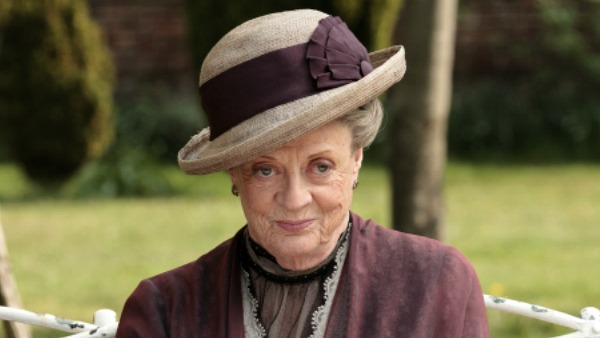
Dame Maggie Smith as Violet Crawley, the Dowager Countess of Grantham

Dame Maggie Smith as Violet Crawley, the Dowager Countess of Grantham

Now, as a woman, I like seeing varied and complicated portraits of women in media. But I also like seeing varied and complicated portraits of men, because both sexes are varied and complicated. One of the reasons Downton Abbey appeals so deeply is that it’s characters, both male and female, and varied and complicated people.

What I question isn’t so much that Return to Downton Abbey underscored the female characters, but that it did so at the expense of the male ones. Sir Robert thinks he knows best, but his wife and mother know differently; while Carson is afraid of the telephone, Mrs. Hughes buys a toaster; and so on. It’s a focal imbalance that’s prevalent in post-modern feminism – that in order for women to be strong, men must be useless, weak, myopic or crippled in some way – and I think it does both sexes a great injustice.

It’s a tired appeal that sprung out of an impulse to make room for women in the 20th century because so much room had to be made for women to develop and exert their various strengths. But we have progressed since Eliza Doolittle needed Henry Higgins to tell her what to do. I’d like to think that we’ve progressed to a point where we can accept intelligence and capability in women as a normal, expected, trait. I’d like to think that we no longer require strength in women to be paired with weakness in men.

Image courtesy of richardsfabulousfinds.com

Strength, wisdom and capability aren’t feminist virtues – not anymore – and a woman who possesses these virtues isn’t extraordinary. She’s an adult. As far as I can tell, being an adult is a distinctly human condition that members of both sexes should now be able to enjoy without the diminution of the other.  As a woman, I don’t want a cookie, (or special, aren’t-you-amazing-and-powerful-just-because-you’re-a-woman marketing campaign) for acting like a grown-up.

The real strength of the show, and the feminist angle that I’d like to see implicit in its marketing, is that the women of Downton Abbey are fully adult human beings, with all of the strengths and flaws and complications that accompany this fact. The real angle I’d like to see marketed is that the women on the show are just as marvelous and interesting and human as the men.